8 Crafts to Turn Your Creative Passion into a Thriving Business
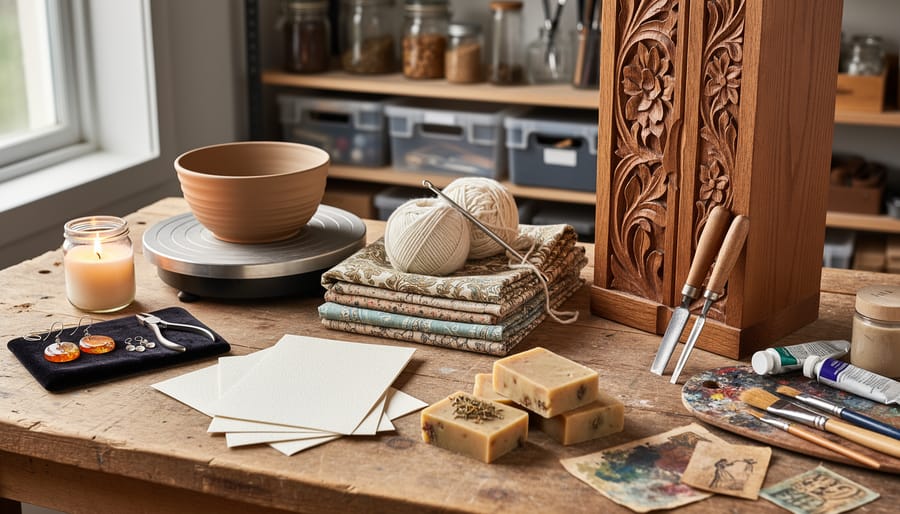
Turning your creative passion into a profitable craft business starts with choosing the right medium, one that matches your skills, excites your market, and can generate sustainable income. The eight crafts that consistently prove their worth in 2026 are handmade jewelry, candle making, pottery and ceramics, custom textiles and fiber arts, woodworking and furniture, paper crafts and stationery, natural soap and bath products, and mixed media or altered art. Each offers distinct advantages: jewelry provides high profit margins in a small package, candles build loyal repeat buyers, pottery delivers functional beauty people use daily, and textiles tap into the enduring demand for home décor with personal meaning.
What separates a hobby from a business isn’t just skill. It’s understanding which crafts align with your natural abilities, available workspace, startup budget, and the kind of customer relationships you want to build. Sarah Chen started making resin earrings at her kitchen table with less than $100 in supplies. Three years later, her jewelry line supports her full-time and ships to customers across North America. Meanwhile, Tom Rodriguez turned a weekend woodworking habit into a custom furniture studio that books projects six months out.
The crafts that thrive share common traits: they solve real problems or fulfill genuine desires, they can scale without sacrificing quality, and they create opportunities for both one-time sales and ongoing customer relationships. Whether you’re drawn to the tactile satisfaction of shaping clay, the precision of metalwork, or the aromatic creativity of candle blending, the path from maker to business owner follows proven patterns you can adapt to your own vision.
How We Chose These Eight Crafts
We didn’t just pick these eight crafts randomly. Each one earned its spot through rigorous evaluation against five specific criteria that matter when you’re building a sustainable creative business:
- Strong market demand in 2026, with buyers actively searching for and purchasing these handmade items
- Low barrier to entry that lets beginners start without huge upfront investments in equipment or training
- Scalability potential to grow from hobby side-income to full-time business as your skills develop
- Materials accessibility, with supplies available locally or online at reasonable prices
- Proven track record of real crafters building profitable businesses in each category
These criteria reflect both market reality and practical startup considerations. You’ll find established online marketplaces filled with successful sellers in each craft category, demonstrating genuine buyer interest. At the same time, each craft allows you to start small, testing the waters before committing significant resources. We focused on crafts where you can begin in a spare room or garage, learn through practice and online resources, and scale up as customer demand grows. The eight crafts ahead represent genuine opportunities where passion meets profitability.
1. Handmade Jewelry: Wearable Art with Wide Appeal
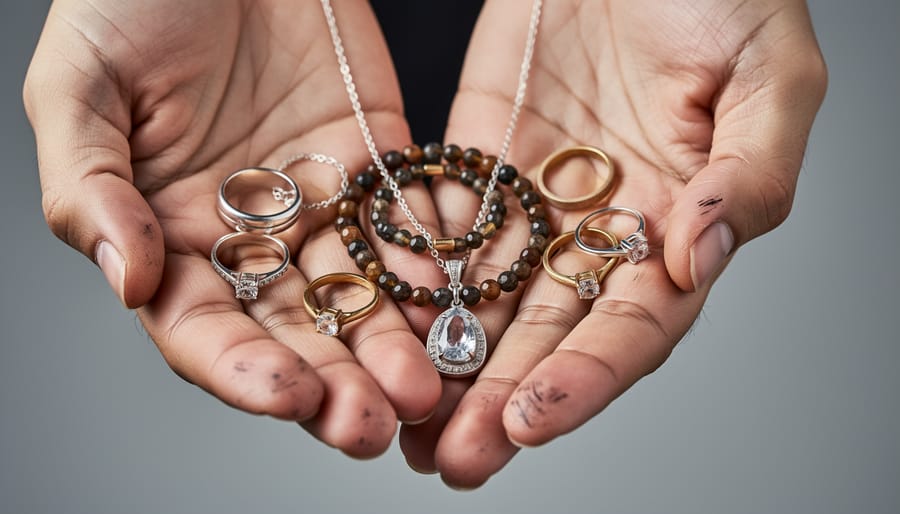
Jewelry crafting offers one of the lowest barriers to entry among craft businesses while maintaining some of the highest profit margins. You can start with basic wire, pliers, and beads for under $100, yet create pieces that sell for five to ten times your material costs. The perceived value of jewelry, something people wear close to their bodies, give as gifts, and use to express their identity, means customers willingly pay premium prices for handmade, unique designs.
Sarah Chen started making wire-wrapped rings at her kitchen table in 2024. She invested $85 in basic tools and copper wire, sold her first pieces to coworkers for $25 each, and now runs a full-time jewelry business generating over $6,000 monthly through Etsy and local craft fairs.
The jewelry market accommodates every skill level and budget. Wire wrapping requires minimal tools and creates elegant, organic designs. Beading appeals to those who love color and pattern, with endless combinations of glass, gemstone, and metal beads. Resin jewelry has exploded in popularity, allowing crafters to embed flowers, glitter, or personal mementos in clear, colorful pieces. Each technique can be learned through free online tutorials and refined with practice.
You can position your work anywhere along the price spectrum. Costume jewelry made with brass findings and glass beads sells well at $15-$45 per piece at craft fairs and online marketplaces. Fine jewelry using sterling silver, gold-fill wire, and genuine gemstones commands $75-$500+ and attracts customers seeking heirloom-quality pieces. Both niches support thriving businesses.
The sales channels are equally diverse: Etsy provides built-in traffic, Instagram showcases visual appeal, craft fairs offer face-to-face connections, and custom commissions let you charge premium prices for personalized designs.
2. Candle Making: Fragrant Products with Repeat Customers
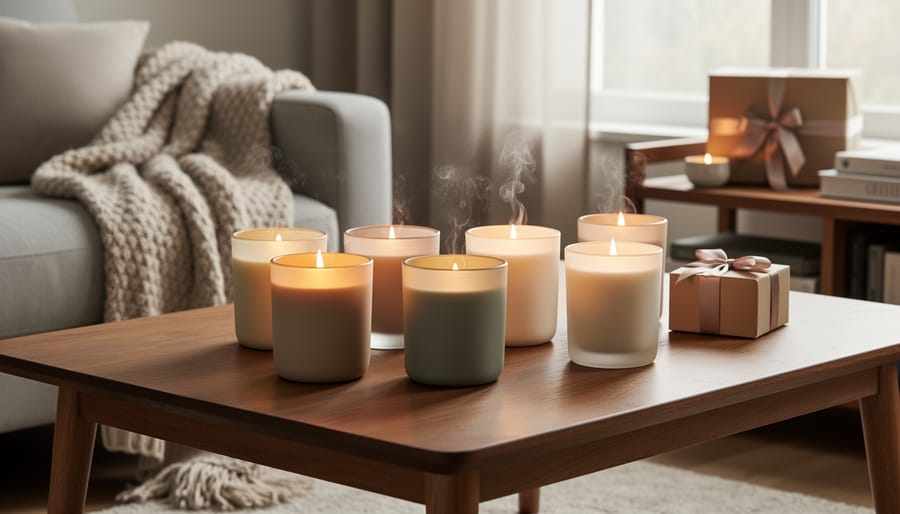
Candle making consistently ranks among the most profitable crafts because customers come back for more once their favorites burn down. Unlike a handmade mug that lasts for years, candles are consumable products that naturally drive repeat purchases, creating a dependable revenue stream. The global candle market continues growing year over year, with customers increasingly seeking artisan candles that offer unique scents and sustainable ingredients over mass-produced alternatives.
Starting a candle business requires minimal upfront investment. Basic supplies, wax, wicks, fragrance oils, and containers, cost less than $200 for initial batches. Most candle makers begin in their kitchen, testing formulas and developing signature scents before scaling up. You can choose from several wax types: soy wax burns cleanly and appeals to eco-conscious buyers, beeswax offers natural air-purifying properties and commands premium prices, while paraffin-soy blends provide excellent scent throw at lower cost.
The real magic lies in creating your signature scent profiles. Source fragrance oils from reputable suppliers who provide detailed scent descriptions and blend well together. Start with three to five core scents rather than overwhelming customers with choices. Many successful candle makers build their brand around a specific theme, coastal scents, seasonal collections, or literary-inspired fragrances that tell a story.
Container selection offers another customization angle. Vintage teacups, mason jars, concrete vessels, or sleek tins each attract different customer segments. Test your wicks thoroughly with each container-wax combination to ensure even burning and proper scent distribution.
Market your candles through Instagram-friendly photography showcasing the ambiance they create. Highlight what makes yours different: hand-poured in small batches, made with organic essential oils, or supporting a cause through your sales. Remember that proper labeling matters, research requirements including weight, ingredients, and safety warnings before selling.
3. Pottery and Ceramics: Functional Art for Home and Table
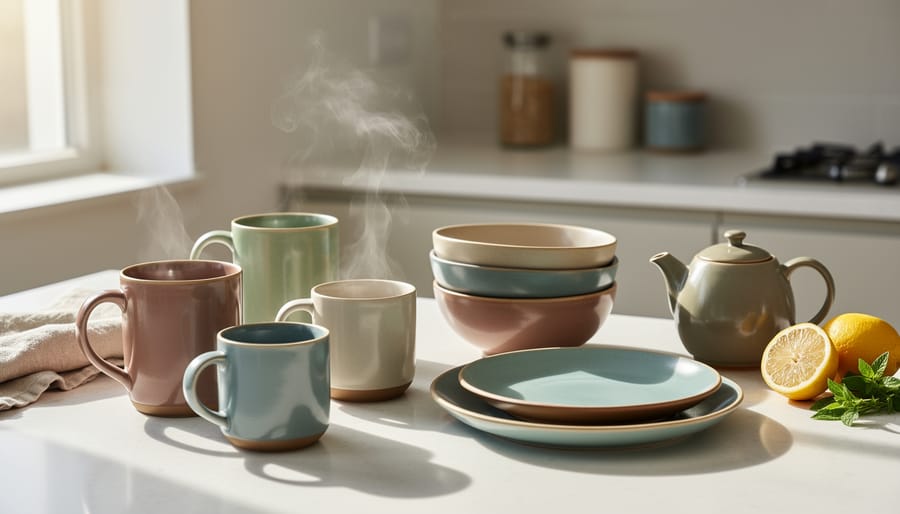
Pottery transforms earth into objects people reach for every morning, that coffee mug, the bowl cradling breakfast, the planter on a sunny windowsill. This daily intimacy makes ceramics uniquely marketable. Customers aren’t buying decorative items to admire from a distance; they’re investing in functional pieces that become part of their routines, and they’ll often return for matching sets or gifts.
The pottery business appeals because it combines artistic expression with practical utility. A potter named Maria started in her garage with a secondhand wheel and rented kiln time at a community studio. Within three years, she was running weekend workshops, maintaining a waitlist for custom dinnerware sets, and selling production pieces through local boutiques. Her signature line of textured planters found an audience on Instagram, where customers loved seeing plants styled in her work.
Initial investment varies dramatically based on your approach. Wheel throwing requires a pottery wheel ($300-$2,000) and kiln access, either purchased ($1,500-$5,000 for a small electric kiln) or rented through community studios or colleges. Hand-building techniques, pinch pots, coil building, slab construction, need far less: basic tools, clay, and kiln access. Many successful potters start with hand-building while saving for equipment, or focus entirely on this approach to keep overhead low.
Business opportunities span multiple channels. Custom orders for wedding registry sets or restaurant dinnerware command premium prices. Production lines of mugs or bowls create steady income through wholesale accounts and online shops. Teaching workshops generates additional revenue while building community connections. Like diverse offerings such as crochet blanket patterns appeal to fiber artists, pottery’s range, from rustic farmhouse to sleek modern, lets you carve out a distinctive niche that reflects your aesthetic and attracts your ideal customers.
4. Custom Textiles and Fiber Arts: From Quilts to Wall Hangings
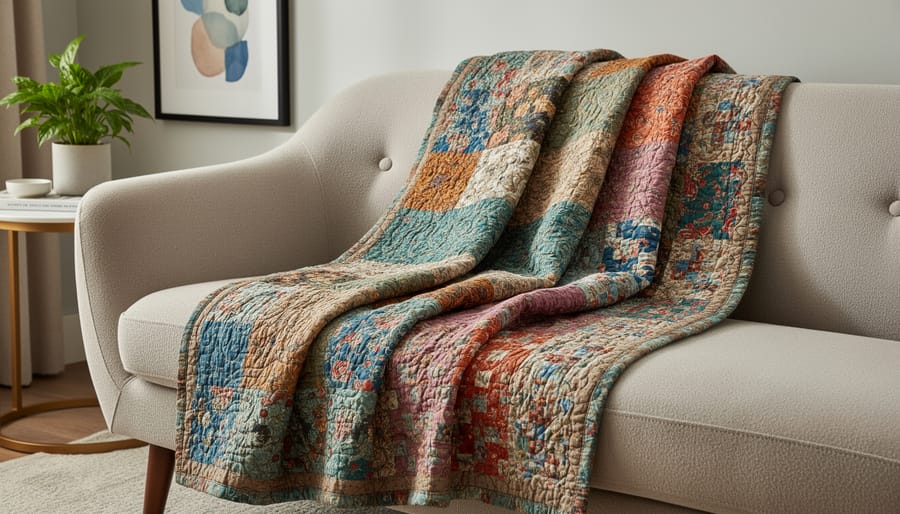
Textile and fiber arts offer something rare in the craft business world: pieces that become part of people’s daily lives while carrying emotional weight. A handmade quilt wraps a new baby, a macramé wall hanging transforms a bare wall into a focal point, and a hand-woven scarf becomes someone’s signature piece. This emotional connection translates directly into sales.
The fiber arts category spans traditional techniques like quilting and weaving alongside contemporary approaches like macramé, punch needle, and textile collage. Each technique opens different market segments. Quilters find strong demand for baby quilts, memorial pieces made from loved ones’ clothing, and modern wall hangings that appeal to design-conscious buyers. Weavers create everything from table runners to wearable art. Macramé artists sell plant hangers, wall hangings, and home accessories. Some fiber artists even apply similar knotting and textile techniques when they make a DIY phone case or add charms to fabric accessories, showing how textile skills transfer across product categories.
What makes fiber arts particularly business-friendly is the ability to work at multiple price points. Smaller items like coasters or ornaments make perfect impulse purchases at craft fairs, while commissioned quilts or large weavings command premium prices. The gift market stays strong year-round, with wedding quilts, baby items, and housewarming pieces always in demand.
Startup costs vary widely. Quilting requires a sewing machine and fabric stash, but you can start small. Macramé needs only cord and basic supplies. Weaving demands more investment for looms, though simple frame looms cost under $100. Most fiber artists begin with one technique, then expand their skills and product range as their business grows.
5. Woodworking and Furniture: Craftsmanship That Lasts Generations
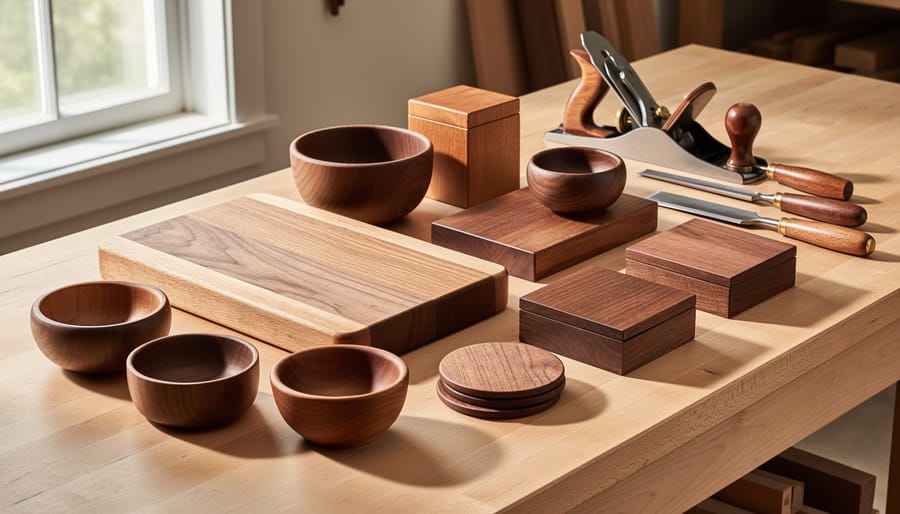
Woodworking transforms raw lumber into heirloom-quality pieces that customers treasure for decades. Unlike consumable crafts, wooden items carry inherent value, a handcrafted cutting board becomes a kitchen centerpiece, a custom shelf solves a specific space problem, and wooden toys pass from generation to generation.
The market for handmade wood products remains strong in 2026 because people actively seek alternatives to mass-produced furniture. They want pieces with character, sustainability credentials, and the story of a maker’s hands shaping each curve and joint. Cutting boards consistently top the bestseller lists for woodworking businesses because they combine functionality with gift-appeal, typically selling for $40 to $150 depending on wood species and complexity.
Starting small makes sense even if you dream of building custom furniture eventually. Many successful woodworkers began with projects requiring minimal equipment, simple floating shelves, phone stands, or serving trays. You need basic hand tools (saws, chisels, sanders), clamps, and safety gear before investing in larger equipment like table saws or planers. A garage or basement workspace works perfectly at first, though proper dust collection and ventilation matter more than square footage.
Premium pricing becomes achievable once you develop signature techniques or work with sought-after woods like walnut, cherry, or reclaimed barn wood. Customers pay willingly for quality joinery, food-safe finishes, and designs they can’t find at furniture stores. Sarah Chen started making wooden toys in her apartment workshop, selling through Instagram. Within two years, her custom nursery furniture commands $800 to $2,500 per piece, with a three-month waitlist.
The key advantage? Wood projects scale naturally, you control production pace, take custom commissions, and build exactly what excites you while meeting real market demand for sustainable, handcrafted goods.
6. Paper Crafts and Stationery: Personalized Touches for Every Occasion
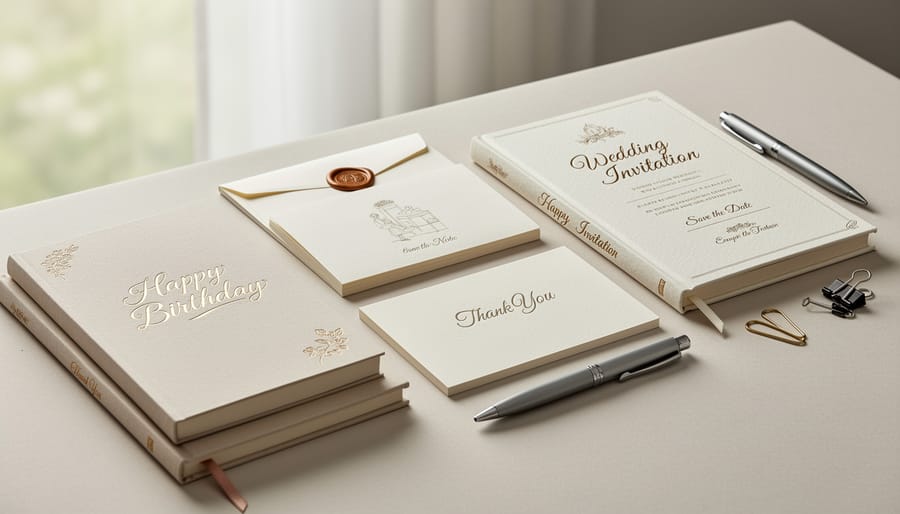
Paper crafts offer one of the lowest barriers to entry of any craft business. You can start with basic supplies many people already own, cardstock, scissors, glue, and grow into specialty tools like die-cutting machines and foil presses as your business develops. The paper crafting market thrives because people constantly need personalized items for life events: weddings, births, graduations, holidays, and everyday celebrations.
Wedding stationery represents a particularly lucrative niche. Custom invitation suites can command $500 to $2,000 per wedding, with brides valuing the personal touch and uniqueness that handmade pieces provide. Beyond invitations, the wedding market extends to save-the-dates, programs, place cards, thank-you notes, and decorative elements like paper flowers for bouquets and centerpieces. Sarah Chen started her paper flower business from her dining room table in 2024, creating realistic blooms from crepe paper. Within eighteen months, she was supplying three local wedding planners and teaching monthly workshops that became a secondary income stream.
Greeting cards offer steadier, year-round income. Hand-stamped, letterpress, or watercolor cards sell well at craft fairs, boutiques, and online shops, with customers willing to pay $5 to $8 per card for something more meaningful than mass-produced options. The consumable nature of cards encourages repeat purchases, customers who love your style return for birthdays, holidays, and special occasions throughout the year.
Bookbinding and journal making appeal to both gift-buyers and personal use customers. Handbound journals, sketchbooks, and planners with custom covers, leather, fabric, decorative papers, sell for $30 to $150 depending on size and materials. Many paper crafters develop signature styles, whether that’s botanical prints, vintage maps incorporated into covers, or specific binding techniques like Coptic stitching that become their calling card.
The beauty of paper crafts lies in scalability. You can produce simple cards in batches for affordable pricing or invest hours in elaborate custom wedding suites that command premium rates, adjusting your offerings to match available time and business goals.
7. Soap and Bath Products: Natural Wellness with Loyal Following
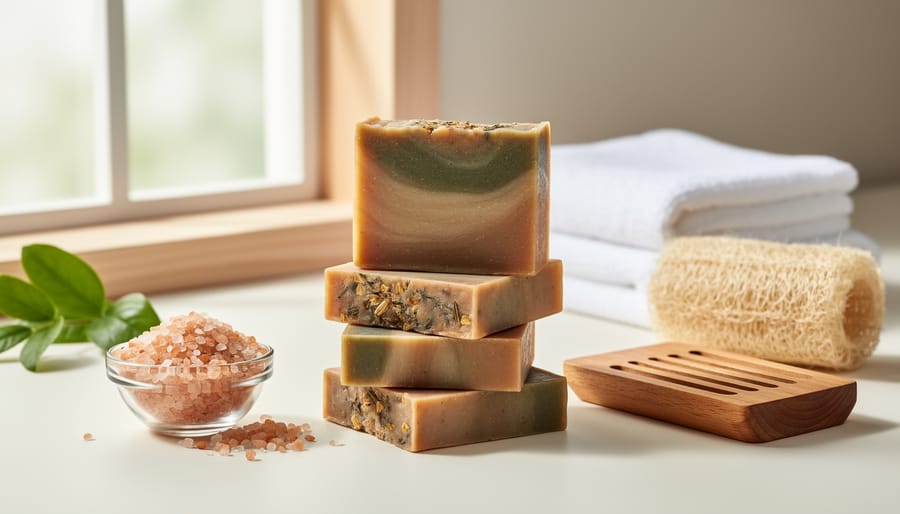
The natural bath and body market has exploded over the past few years, and handmade soap and skincare products sit at the heart of this wellness movement. Customers actively seek alternatives to mass-produced products filled with synthetic ingredients, creating a loyal customer base willing to pay premium prices for artisan-made items they can trust.
Cold-process soap making offers the perfect entry point into this craft business. The basic technique requires just oils, lye, and water, yet allows endless creativity through natural colorants, essential oils, and botanicals. Once you master the fundamentals, you can expand into luxurious additions like shea butter, activated charcoal, or locally-sourced honey. Each batch yields dozens of bars, making production efficient once you develop reliable recipes.
Bath bombs and body scrubs round out a product line beautifully. These items require simpler processes than soap making and appeal to gift shoppers. A bath bomb fizzing with lavender and Epsom salts or a coffee scrub packaged in an attractive jar can command fifteen to twenty dollars while costing just a few dollars to produce.
Building a successful bath products business hinges on your brand story. Many thriving soap makers center their businesses around clear values: completely vegan formulations, certified organic ingredients, or materials sourced from local farms. This focused approach attracts customers who share those values and builds genuine loyalty.
However, you must understand regulatory requirements before selling. Soap labeled simply as soap faces minimal regulation, but any product making moisturizing or therapeutic claims requires FDA cosmetic compliance. Accurate ingredient labeling, proper weights, and safety assessments become crucial. Researching these requirements upfront prevents costly mistakes and builds customer trust through professional, compliant products.
8. Mixed Media and Altered Art: Unique Creations for Collectors

Mixed media and altered art occupy a special niche in the craft marketplace, attracting collectors and gift-buyers who value truly one-of-a-kind creations. This craft combines various materials, vintage papers, found objects, fabric scraps, paint, ink, and ephemera, into layered artworks that tell stories through texture and composition. Artists create altered books that transform discarded volumes into visual narratives, assemblages that give new life to forgotten objects, and upcycled art that turns trash into treasure.
The appeal to buyers is straightforward: no two pieces are ever identical. Collectors appreciate the originality and personal expression in each work, while gift-buyers love finding something genuinely unique that can’t be replicated. Mixed media pieces work as wall art, functional journals, decorative objects, or standalone sculptures, offering versatility that broadens your potential market.
Sarah Chen started with a box of her grandmother’s old letters and photographs, creating a single altered book as a memorial project. Friends’ enthusiastic responses led her to craft fairs, where her pieces consistently sold at premium prices. She discovered that buyers connected emotionally with the stories embedded in her work, the vintage button that became an eye, the music sheet fragment that suggested a melody.
Pricing original mixed media art requires confidence. Unlike production crafts, you’re selling artistic vision alongside materials and time. Research comparable artists, consider your experience level, and don’t undervalue the creative process. Start with smaller pieces at accessible price points ($50-$150) while building your portfolio and reputation.
Finding the right sales channels matters enormously. Online platforms like Etsy and Instagram work well for smaller pieces and building followers, but serious collectors often browse art fairs, cooperative galleries, and juried shows. Many successful mixed media artists maintain multiple channels, an online shop for accessibility, select gallery representation for prestige, and quarterly art fairs for direct customer connection.
The beauty of this craft is that materials are everywhere. Thrift stores, estate sales, and your own accumulated treasures become your supply source. Learning to organize craft supplies becomes essential as your collection of potential components grows, ensuring you can find the perfect element when inspiration strikes.
Essential Steps to Launch Your Craft Business
Turning your craft into a business requires more than creative skill, you need a solid foundation in pricing, presentation, and operations. Start by calculating your true costs: materials, labor at a fair hourly rate (minimum $20-30 for skilled handwork), overhead, and profit margin. Too many crafters underprice their work by forgetting to value their time, which undermines both sustainability and the broader handmade market.
Build your online presence strategically rather than spreading yourself too thin. Choose two or three platforms where your target customers actually shop, Etsy for discoverability, Instagram for visual storytelling, a simple website for credibility, or Facebook for community building. Post consistently, use quality photos with natural lighting, and tell the story behind your work. Authenticity matters more than polish.
For sales channels, test multiple approaches: online marketplaces offer built-in traffic, local craft fairs provide direct customer feedback, consignment with local craft brands and boutiques builds regional presence, and custom commissions often command premium pricing. Track which channels generate the best profit per hour invested, not just the most sales.
Handle the business basics early to avoid headaches later. Register your business name, obtain any required licenses or permits (especially important for soap and bath products), keep separate finances, and understand sales tax obligations in your region. Simple bookkeeping from day one makes tax time manageable and helps you see which products actually turn a profit.
Frequently Asked Questions
Which craft is most profitable?
Profitability depends more on your execution than the craft itself, but consumables like candles and soap tend to generate consistent repeat sales, while jewelry and paper crafts offer excellent profit margins with relatively low material costs. The most profitable craft for you is the one you can produce consistently while maintaining quality and finding your target market.
How much startup capital do I need?
You can start many crafts with $100 to $300 for basic supplies, paper crafts, candle making, and jewelry require minimal initial investment. Pottery and woodworking demand more upfront costs ($500 to $2,000) for equipment, though you can often access shared studio spaces or start with hand tools before investing in major equipment.
Can I start a craft business part-time?
Absolutely. Most successful craft entrepreneurs began while working another job, dedicating evenings and weekends to building their business gradually. Starting part-time lets you test your market, refine your products, and build a customer base before committing full-time.
How do I price handmade items?
Calculate your material costs, then multiply by three to cover overhead and wholesale margins, or by four for retail pricing that accounts for your time and expertise. Track how long each piece takes to make and ensure you’re paying yourself at least minimum wage, adjusting your prices upward as your skills and reputation grow.
Where should I sell my crafts?
Start with online platforms like Etsy or your own website to reach a broad audience with low overhead, then add local craft fairs and markets to connect with customers face-to-face. As you grow, consider wholesale relationships with boutiques or opening a booth in a local artisan cooperative.
What legal requirements exist for craft businesses?
Most crafts require a business license from your city or county, and you’ll need to collect sales tax in states where you have nexus. Soap and bath products face additional regulations from the FDA regarding labeling and ingredient disclosure, while food-adjacent items may require health department permits depending on your location.
These questions come up repeatedly in crafting communities, and the answers reveal an encouraging truth: you don’t need a massive budget or years of preparation to start. What matters most is choosing a craft that genuinely excites you, pricing your work to sustain the business, and staying consistent as you learn what your customers want. The legal side sounds intimidating, but it’s mostly straightforward paperwork that becomes routine once you’ve done it the first time.
You’ve explored eight proven crafts that can transform your creative passion into a thriving business. Each offers unique opportunities, from the customizable appeal of handmade jewelry to the collectible nature of mixed media art. The craft that will work best for you isn’t necessarily the most profitable on paper, it’s the one that matches your skills, excites your creativity, and fits your lifestyle.
Starting your craft business requires both inspiration and strategy. Choose materials you love working with, understand your market, price your work fairly, and build genuine connections with customers who appreciate handmade quality. Whether you’re drawn to the fragrant world of candle making, the tactile satisfaction of pottery, or the personalized touch of paper crafts, you have everything you need to begin.
Every successful craft entrepreneur started exactly where you are now, with skills, passion, and the courage to share their creations. Pick your craft, make your first piece for sale, and take that essential step from hobbyist to business owner. Your handmade creations deserve to find the people who will treasure them. The craft community is waiting to welcome you, and your creative journey as an entrepreneur starts today.