15 Quick and Easy Crochet Blanket Patterns Free to Download in 2026
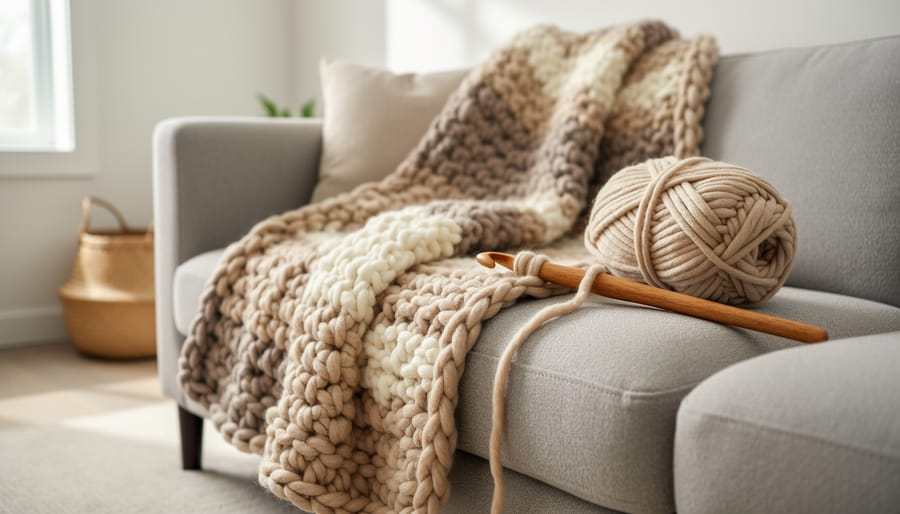
There’s nothing quite like the satisfaction of finishing a cozy crochet blanket without spending months on the project or emptying your wallet for a pattern. You can complete a beautiful throw in as little as a weekend using free patterns designed specifically for speed and simplicity, most requiring only basic stitches and minimal color changes.
The secret to quick blankets lies in three elements: chunky or bulky yarn that works up fast, simple stitch repeats you can memorize after a few rows, and generous hook sizes that cover ground quickly. These aren’t the intricate heirloom afghans your grandmother labored over for years. They’re modern, stylish designs that respect your time while still delivering that handmade warmth.
I’ve gathered 15 genuinely free patterns that deliver on the promise of quick and easy. Each one includes clear instructions, accessible downloads, and realistic time frames. Whether you’re a beginner who just learned the basic stitches last week or an experienced crocheter looking for a satisfying project between more complex work, these patterns offer immediate success without compromise on style.
The patterns ahead range from one-skein wonders to beginner-friendly granny squares, from textured throws that look far more complicated than they are to modern minimalist designs. What they share is a commitment to getting you wrapped in your finished blanket sooner rather than later, with zero cost for the pattern itself.
What Makes a Crochet Blanket Pattern Quick and Easy
Not all free patterns are genuinely quick. After reviewing hundreds of options, the patterns in this collection share five defining characteristics that separate a weekend project from a month-long commitment.
- Simple stitches: single crochet, half double crochet, or basic granny squares that don’t require constant pattern reference
- Fast-working yarn: chunky or super chunky weights like Paintbox Yarns Wool Mix Super Chunky that build coverage with every stitch
- Minimal color changes: solid colors or simple stripes that don’t interrupt your rhythm
- Straightforward construction: rectangle or join-as-you-go designs without complex shaping
- Beginner-friendly techniques: patterns that assume you know the basics but nothing advanced
The combination matters more than any single factor. A pattern using super chunky yarn with a simple-to-learn stitch hooks up fast, creating visible progress in your first sitting. That momentum keeps beginners motivated and gives experienced crocheters a satisfying quick win between more complex projects.
Sarah Maker’s collection of 46 free patterns exemplifies these principles, offering designs that balance speed with visual appeal. True quick patterns let you start Friday evening and finish by Sunday afternoon, not theoretically but actually. When a pattern claims to be quick, look for these five criteria in the description before you commit your time and yarn.
15 Free Quick and Easy Crochet Blanket Patterns
1. Super Chunky Single Stitch Blanket
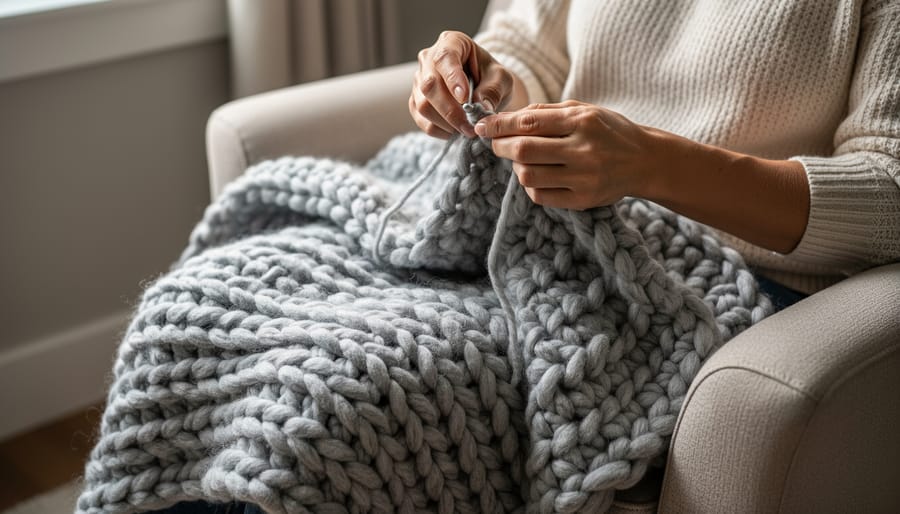
This pattern uses super chunky yarn (like Paintbox Yarns Wool Mix Super Chunky) with a simple-to-learn stitch that hooks up fast, perfect if you’ve never crocheted before. You’ll work basic single crochet or half double crochet stitches back and forth across the width, creating a thick, cozy blanket in a fraction of the time a worsted-weight project would take. The chunky yarn means fewer stitches to cover the same area, so you’ll see progress within the first hour. Most beginners finish a lap-sized version in a weekend. Find free patterns for this style through Sarah Maker’s collection of 46 quick patterns or the Lovecrafts tutorial library, both offer downloadable PDFs with stitch-by-stitch instructions and yarn quantity charts.
2. Classic Granny Square Blanket
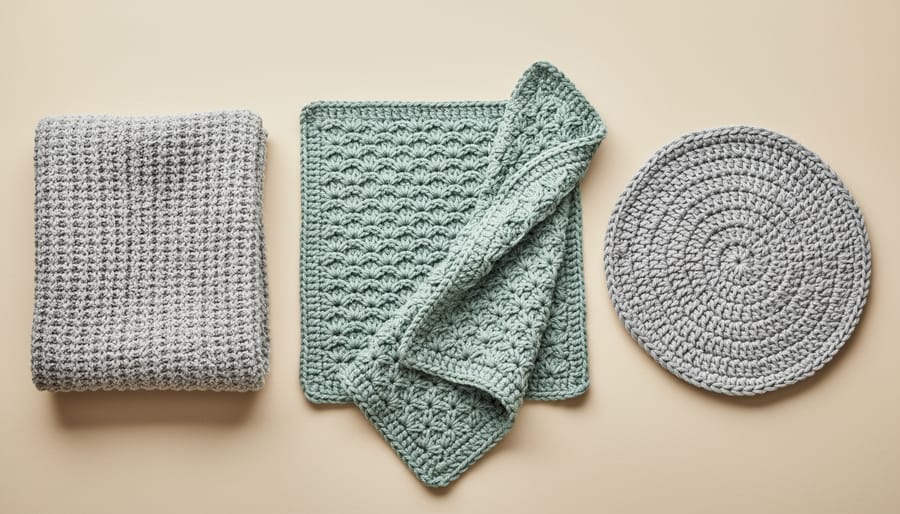
The granny square blanket remains one of the most beginner-friendly patterns available, and its modular design makes it genuinely quick to complete. You work in small, manageable squares rather than wrestling with an entire blanket at once, which means each square finishes in minutes and gives you a satisfying sense of progress. This portability is a real advantage: toss a ball of yarn and a few in-progress squares into your bag and crochet during lunch breaks, commutes, or while watching TV. The pattern uses basic chain and double crochet stitches arranged in clusters around a central ring, creating the iconic granny square look with minimal technique. You can stop at any size you want by simply making more or fewer squares, and since you’re joining completed motifs, there’s no commitment to a massive project from day one. Many free patterns are available through collections like Sarah Maker’s 46 free quick and easy patterns, where you’ll find variations on the traditional granny square approach.
3. Striped Aran Weight Blanket
Aran weight yarn hits the sweet spot between quick progress and cozy warmth. A striped blanket using this medium-weight yarn works up row by row without complicated stitch patterns, making it ideal for crafters who want something they can complete in a week or two of casual evening work.
The beauty of stripes lies in their flexibility. You can work the entire blanket in a single color for meditative repetition, or switch colors every few rows to use up your stash and create visual interest. Color changes happen at row ends, so there’s no weaving in mid-row. Each row builds on the last using basic stitches like half double or double crochet, creating a rhythm that lets you work while watching television or listening to podcasts. Free patterns for striped Aran weight blankets appear frequently in online crochet communities and yarn brand websites.
4. Corner-to-Corner (C2C) Lap Blanket
The corner-to-corner technique starts small with a single square in one corner, then grows diagonally by adding squares row by row until you reach your desired size. This diagonal growth feels faster than traditional row-by-row construction because you see progress in multiple directions at once. The C2C method uses simple double crochet clusters, making it accessible even if you’ve only mastered basic stitches. It’s ideal for creating lap-sized throws without the marathon commitment of a full bedspread. The diagonal pattern naturally lends itself to color blocking or gradient effects, and since each square uses relatively little yarn, it’s perfect for working through leftover skeins from other projects without worrying about dye lots matching perfectly.
5. Ripple Stitch Afghan
The ripple stitch afghan delivers that classic wave pattern you’ve seen in vintage blankets, but it works up surprisingly fast because you’re repeating the same simple sequence of increases and decreases across every row. Once you establish the rhythm, typically alternating double crochets with strategic skipped stitches to create the valleys and peaks, your hands find the pattern almost automatically, letting you crochet while watching TV or chatting with friends.
This pattern looks intricate and time-consuming, but the mesmerizing repetition actually speeds your progress because you’re not constantly checking instructions or counting complex stitch combinations. You can find free ripple blanket patterns in various wave widths through Sarah Maker’s collection of 46 free patterns, where designers share different color-change approaches and size adaptations. The textured waves add visual interest without requiring new techniques beyond basic double crochet, making this an ideal choice if you want a finished blanket that looks impressive without the complexity.
6. Moss Stitch Throw
The moss stitch throw combines elegance with simplicity through its alternating single crochet and chain-one pattern. You’ll work the same stitch sequence throughout the entire blanket, making it perfect for multitasking or evening crochet sessions where you don’t need to constantly reference instructions. The textured checkerboard effect creates visual interest despite using just one stitch type, and because both sides look identical, there’s no wrong or right side to worry about. This pattern works beautifully with medium-weight yarn and completes faster than traditional solid single crochet blankets due to the chain spaces.
7. Shell Stitch Baby Blanket
Baby blankets make ideal quick-crochet projects because their smaller dimensions mean you’ll finish in a weekend rather than weeks. The shell stitch creates an elegant, scalloped texture that looks impressive but relies entirely on basic chains and double crochets, no complicated maneuvers required. Each shell fan repeats in a satisfying rhythm, and the pattern naturally creates a soft, stretchy fabric perfect for wrapping little ones. You can find free shell stitch baby blanket patterns through Sarah Maker’s collection of 46 free patterns and other designer sites. This is the go-to project when you need a thoughtful handmade gift but don’t have months to complete it, and the finished result looks far more intricate than the straightforward technique behind it.
8. Single Crochet Stripe Blanket
The single crochet stripe blanket is the ultimate confidence-builder for anyone just learning to crochet. You’ll work with the most fundamental stitch in crochet, single crochet, from start to finish, which means no complicated stitch combinations to remember or decipher from pattern instructions. Once you’ve got the rhythm of inserting your hook, yarning over, and pulling through, you can essentially work on autopilot while watching your favorite shows.
What transforms this from plain to impressive is the strategic use of color changes. Switch yarns every few rows to create bold stripes, or change colors more frequently for a playful, modern look. The beauty is that you’re still using the exact same stitch, just swapping one ball of yarn for another at the end of a row. This approach lets you create a visually dynamic blanket without learning a single new technique beyond your foundation single crochet stitch. Many free patterns for single crochet stripe blankets are available through general crochet pattern databases and designer websites, where you can find specific color placement suggestions or adapt the stripe widths to your personal taste.
9. Chunky V-Stitch Afghan
The V-stitch creates a beautiful drape with clusters of double crochets separated by chain spaces, making this afghan work up surprisingly fast. The open construction means you’ll use significantly less yarn than solid stitches while still creating a cozy blanket that isn’t heavy or stiff. This pattern works best with worsted or chunky weight yarn and a larger hook than you’d typically use for that yarn weight, which speeds up the process even more. The repeating pattern is simple enough to memorize after a few rows, letting you crochet while watching TV without constantly checking instructions. You can find free V-stitch afghan patterns through Sarah Maker’s collection of 46 free patterns and other established crochet designers who share their work online.
10. Waffle Stitch Lap Blanket
The waffle stitch creates a deeply textured, almost three-dimensional fabric that looks far more complex than it actually is. You’ll work with simple double crochet and front post double crochet stitches in an easy repeating sequence, building up those satisfying raised squares that give the stitch its name. A lap-sized blanket in worsted or aran weight yarn typically takes a dedicated weekend to complete, making this a medium-speed project that delivers impressive visual impact for relatively modest effort. The thick, cushy texture means your finished blanket will be wonderfully warm and cozy, perfect for draping over a reading chair or keeping on the couch for movie nights.
11. Half Double Crochet Blanket
The half double crochet stitch strikes the perfect middle ground for blanket makers who want more speed than single crochet without sacrificing warmth or coverage. Each stitch is about twice as tall as single crochet, which means you’ll cover ground faster while still creating a solid, substantial fabric with beautiful drape. The technique itself is straightforward: yarn over, insert hook, yarn over and pull through, then yarn over and pull through all three loops on your hook. This one extra step compared to single crochet adds just enough height to speed up your progress while maintaining that cozy density you want in a lap blanket or throw. The resulting texture is smooth with a subtle horizontal grain that looks polished from both sides, making it ideal for everyday blankets that will see regular use and washing.
12. Chevron Stripe Throw
The chevron’s zigzag design creates eye-catching movement without requiring advanced skills. You’ll work a repeating sequence of increases and decreases across each row, typically clustering stitches at peak points and skipping stitches in the valleys. This creates the characteristic wave pattern that looks intricate but relies on techniques you likely already know: basic stitches, simple increases (working multiple stitches into one space), and decreases (skipping stitches or working stitches together).
The pattern’s strength lies in its predictable repetition. Once you complete the first few rows and establish the rhythm, you can crochet almost on autopilot while the dramatic stripes and peaks take shape. Chevron blankets work beautifully in single colors or bold stripes, and the dimensional texture adds visual weight that makes the finished piece feel substantial and professionally crafted.
13. Bernat Blanket Yarn Quick Project
Working with Bernat Blanket yarn transforms crochet speed entirely. This ultra-bulky chenille yarn is so thick that you’ll watch your blanket grow with every stitch, often completing a throw-size project in just a few hours of actual hook time. The chunky gauge means you’ll use far fewer stitches to cover the same area, and the velvety-soft texture creates an instantly cozy result that feels luxurious despite the simple construction. A basic single crochet or half double crochet pattern works beautifully with this yarn weight, letting the plush fiber do the visual work while you focus on relaxing repetition. You can find free Bernat Blanket patterns directly on the Yarnspirations website under their free pattern collection, or adapt nearly any simple rectangle pattern to this bulky yarn by adjusting your hook size and stitch count.
14. Modular Block Blanket
Modular block blankets offer the ultimate in portable crochet projects. You work individual squares or blocks separately, then join them together at the end, which means you can tuck a single square into your bag and crochet anywhere. The modular approach lets you experiment with different colors and textures in each block without committing to one look for the entire blanket. Cypresstextiles released “Crochet Modular Blankets” (available for pre-order as of late 2025), showcasing this versatile technique. Free modular patterns typically range from simple granny squares to textured blocks, and because each unit is small, you see progress quickly, which keeps motivation high throughout the project.
15. Beginner-Friendly Rectangle Blanket
The true beginner’s choice comes from Daisy Cottage Designs, whose tutorial breaks down rectangle construction into manageable steps that assume zero prior experience. This pattern teaches you to create straight edges and consistent tension while building a simple rectangular throw. The step-by-step approach walks you through foundation chains, turning chains, and row-by-row progression without assuming you understand crochet terminology. You’ll work in basic stitches across predictable rows, making it easy to spot and correct mistakes before they multiply. The rectangular shape means no increases, decreases, or shaping decisions, just repetitive rows that build muscle memory. Find this tutorial on Etsy through Daisy Cottage Designs, where the pattern provides the foundational skills you’ll use in every future blanket project.
Where to Find More Free Patterns
Beyond the fifteen patterns in this collection, you can find thousands more free options by bookmarking a few trusted sources. Sarah Maker maintains a curated collection of 46 free crochet blanket patterns that span various skill levels and styles, offering plenty of variety once you’ve mastered the basics. Lovecrafts provides detailed guides and free patterns alongside their yarn supplies, making it easy to shop for materials and patterns in one place. Daisy Cottage Designs offers beginner-friendly tutorials that walk you through each step, perfect when you need extra guidance.
When evaluating patterns from unfamiliar sources, look for clear stitch instructions, materials lists with specific yarn weights, and photos of the finished project. Designers who include gauge information, estimated completion times, and troubleshooting notes typically offer higher-quality patterns. Reading comments or reviews from other crocheters reveals whether instructions are accurate and easy to follow.
Free patterns support why buy handmade values by making craft skills accessible to everyone, regardless of budget. This democratization of pattern access aligns with ethical sustainable fashion principles, encouraging people to create their own textiles rather than buying mass-produced items. Legitimate free patterns come from designers choosing to share their work generously, not pirated or unauthorized copies of paid patterns.
Tips for Completing Your Quick Blanket Project
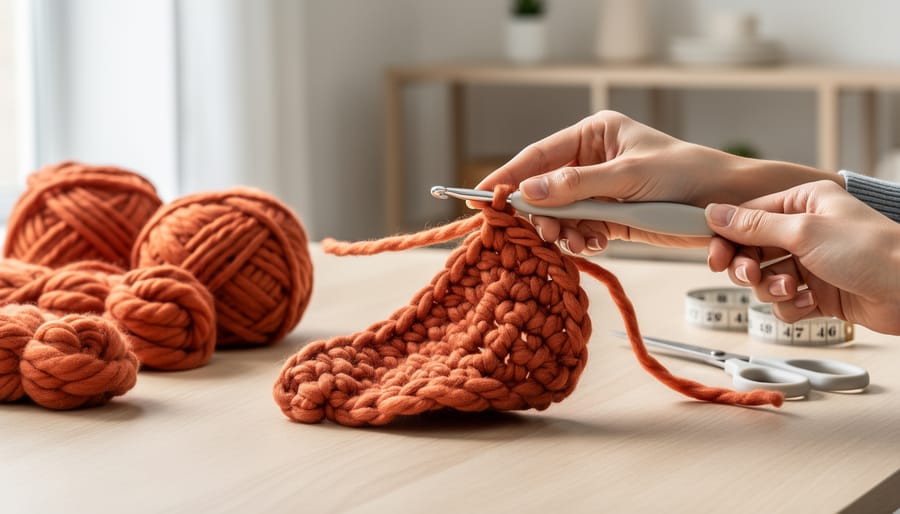
Starting your blanket is exciting, but these practical strategies will help you actually finish it. Choosing the right yarn weight matters more than you might think, chunky and super chunky yarns like Paintbox Yarns Wool Mix Super Chunky genuinely hook up fast, often cutting project time in half compared to worsted weight. Estimate yarn quantities generously; running short halfway through kills momentum and matching dye lots later can be tricky.
Set up a comfortable crochet space with good lighting, your supplies within arm’s reach, and a chair that supports your back. Tension in your shoulders transfers to your stitches, so comfort isn’t just about enjoyment, it affects your finished piece.
Here are specific tactics that keep projects moving forward:
- Batch your crochet time into focused 30-minute sessions rather than waiting for long stretches of free time
- Keep your project portable in a drawstring bag so you can work during commutes or waiting rooms
- Use stitch markers to track pattern repeats and avoid having to rip out rows
- Don’t stress over minor imperfections, handmade character beats machine precision
- Block your finished blanket for a professional finish that evens out stitches
Set realistic time goals based on actual crochet hours, not calendar days. A “quick” blanket still needs several evenings of work. Breaking the project into smaller milestones, finishing the first third, changing colors, reaching halfway, keeps motivation high.
If you create blankets you’re proud of, you might consider ways to sell your crafts or even turn passion to profits through local craft fairs or online platforms. Many crocheters find that sharing their work, whether through gifts or sales, adds purpose that makes finishing easier. The key is starting with patterns you genuinely enjoy making, then building consistency through small, regular progress rather than marathon sessions.
Common Questions About Quick Crochet Blankets
When you’re ready to start your first quick blanket project, a few practical questions naturally come up. Here are the answers that’ll help you choose your pattern and get hooking.
How long does a quick crochet blanket actually take to complete?
A truly quick blanket using super chunky yarn can be finished in 4-8 hours of active crocheting, while medium-weight yarn projects typically take 15-25 hours spread over a few weeks. Your speed increases as you get comfortable with the repetitive stitches.
What’s the best yarn weight for maximum speed?
Super chunky or bulky weight yarns work up fastest because each stitch covers more ground. Options like Paintbox Yarns Wool Mix Super Chunky use simple-to-learn stitches that hook up fast, cutting your project time dramatically compared to thinner yarns.
Can complete beginners actually finish these patterns?
Yes, patterns using single crochet or half double crochet are genuinely beginner-friendly. Start with a small lap blanket or baby blanket rather than a king-size throw, and you’ll build confidence without getting overwhelmed.
How much yarn do I need for a lap-size blanket?
A 40×50 inch lap blanket typically requires 1,200-1,500 yards of worsted weight yarn or 600-800 yards of super chunky yarn. Always buy an extra skein since dye lots vary, and running short near the end is frustrating.
What hook size should I use?
Match your hook to your yarn weight: size H (5mm) or I (5.5mm) for worsted weight, size K (6.5mm) for chunky, and size N (10mm) or larger for super chunky. The yarn label recommends a hook size that creates the right fabric tension.
How do I care for my finished blanket?
Most acrylic yarn blankets are machine washable on gentle cycle and can tumble dry on low, making them perfect for everyday use. Wool blends need hand washing or a delicate wool cycle to prevent felting and shrinkage.
These answers address the most common concerns, but don’t let overthinking delay your start. Pick a pattern that appeals to you, grab the recommended yarn, and begin with that first chain stitch. Like any easy crochet-inspired DIY, the best way to learn is by doing, and you’ll be surprised how quickly those rows add up into a finished blanket you’re genuinely proud of.
items
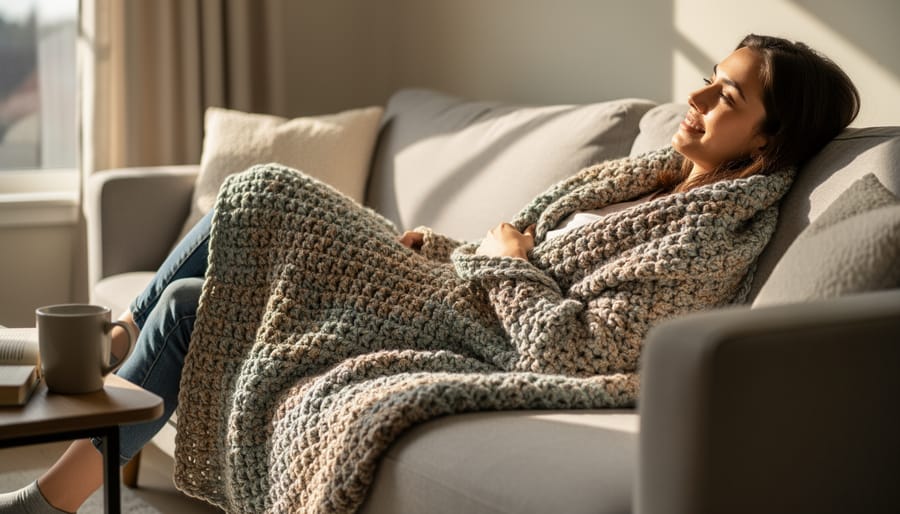
Before diving into any of these 15 free patterns, gather your basic supplies. You’ll need an appropriately sized crochet hook, most quick patterns call for size J/10 (6mm) through P/15 (10mm) for chunky yarn. Stock up on yarn in your preferred weight; super chunky options like Paintbox Yarns Wool Mix Super Chunky will hook up fast using that simple-to-learn stitch, while Bernat Blanket yarn creates finished projects in hours.
Keep scissors handy for cutting yarn and a tapestry needle for weaving in ends. A stitch marker helps track your place in repetitive patterns, and a measuring tape ensures your blanket reaches the desired dimensions. Consider organizing your materials in labeled containers, learning to store craft supplies properly keeps hooks from disappearing and yarn from tangling mid-project.
Most patterns require 1,200-2,000 yards of yarn for a lap blanket, though exact amounts vary by stitch density and finished size. Check each pattern’s specifications before purchasing to avoid running short or overbuying.
Quick Patterns Recap: Your Next Cozy Project Awaits
You’ve now got 15 free patterns at your fingertips, each designed to deliver a finished blanket without eating up months of your time. Whether you’re drawn to the lightning-fast Super Chunky Single Stitch or prefer the portable satisfaction of modular squares, there’s a project here that matches where you are right now in your crochet journey.
Quick doesn’t mean basic. The ripple afghans, shell stitches, and textured waffle patterns prove you can create something genuinely beautiful in a weekend or two. Start with whichever pattern excites you most, beginners might gravitate toward the single crochet stripe blanket, while confident crocheters could tackle the chevron throw or corner-to-corner design.
Grab your yarn and hook, pick a pattern from Sarah Maker’s collection or Daisy Cottage Designs, and cast on today. Once you’ve wrapped yourself in your finished blanket, share it with the crafting community. Your next cozy evening starts with that first stitch.