
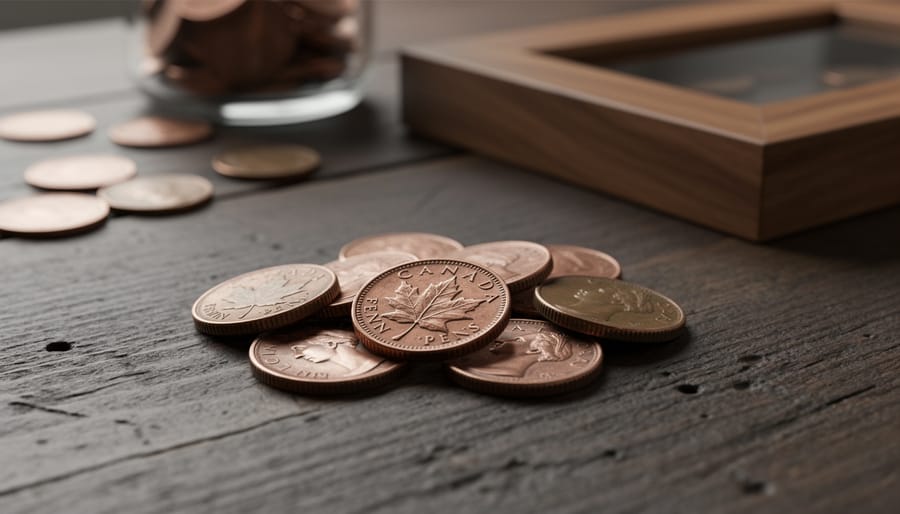
Rare Canadian Pennies: Which Ones Are Worth Keeping and What Makes Them Valuable
Rare Canadian pennies can be worth anywhere from a few dollars to several thousand, and the difference comes down to three factors: date, variety, and condition. While most Canadian pennies in circulation are common and worth little more than face value when worn, a handful of dates and die varieties command serious money from collectors. The key is knowing what to look for in the pennies you already own.
The thrill of discovering a valuable coin hiding in plain sight draws thousands of people into the world of penny collecting each year. You might have inherited a jar of old coins from a grandparent, stumbled across a forgotten collection at an estate sale, or simply started paying closer attention to the copper sitting in your pocket. That curiosity is worth following, because Canadian pennies have a fascinating history spanning from 1858 through 2012, when Canada stopped producing them entirely.
What makes a penny rare isn’t always obvious. Some coins had tiny production runs, like the 1891 penny with its total mintage of just 1,452,500 coins. Others gained value because of mint errors or subtle design variations that only trained eyes can spot. The ‘H’ mintmark on certain years, for instance, indicates coins struck at the Heaton Mint in Birmingham, England, and these can carry premiums depending on the date.
Understanding these details transforms penny hunting from casual curiosity into genuine treasure hunting. And once you’ve identified your finds, displaying them in handcrafted coin frames or shadow boxes turns your collection into a conversation piece that bridges history and artistry. Whether you’re hoping to sell a valuable discovery or start collecting seriously, knowing which pennies to pull from the pile is where your journey begins.
Why Most Canadian Pennies Aren’t Rare (But Some Are Worth a Fortune)
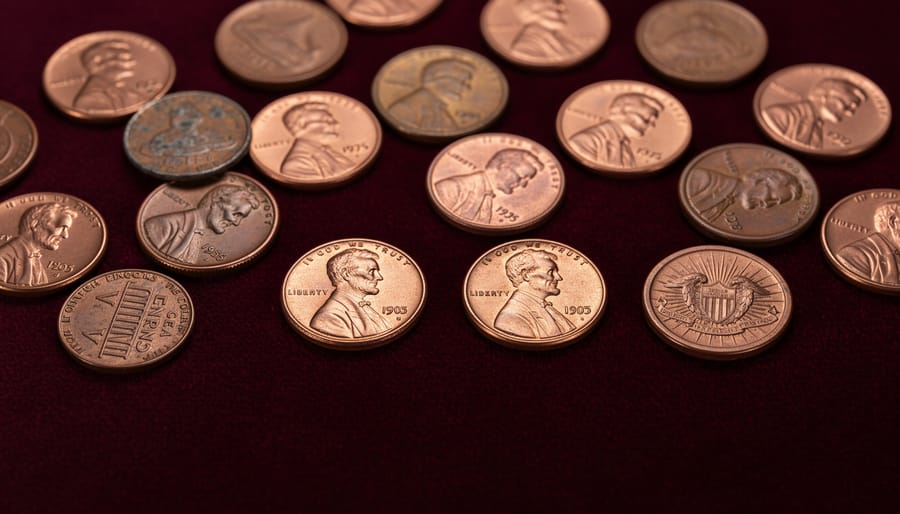
Here’s the thing about Canadian pennies: if you’ve got a shoebox full of them gathering dust, chances are most won’t fund your retirement. The vast majority of Canadian pennies sitting in jars, drawers, and forgotten piggy banks are worth exactly one cent, or in practical terms, nothing at all since Canada stopped using them in 2013. Worn pennies from common years with high production numbers simply don’t command collector interest, no matter how nostalgic they feel.
But here’s where it gets interesting. Tucked among those millions of ordinary coins are a handful of varieties that collectors hunt for with genuine passion, some selling for hundreds or even thousands of dollars. What transforms a humble penny from pocket change into a coveted collectible? Four key factors make all the difference.
First, mintage numbers matter enormously. When a value depends on mintage coins produced in smaller quantities naturally become scarcer. A year with millions minted will always be easier to find than one with a limited run.
Second, condition separates the valuable from the worthless. A penny that’s been circulating for decades, rubbed smooth by countless hands and pockets, will never fetch what a crisp, well-preserved specimen commands.
Third, varieties, those small differences in design details like leaf size or dot placement, create entire subcategories of rarity. We’ll explore these fascinating quirks in depth later, but know that two pennies from the same year can have vastly different values based on subtle design variations.
Finally, historical significance adds narrative weight. Coins tied to specific events, transitions, or unusual circumstances carry stories that collectors want to own. When you combine low mintage with historical context and excellent condition, you’ve got the recipe for a genuinely valuable find. Most pennies lack these qualities, but discovering one that doesn’t? That’s the treasure hunt that makes this hobby so rewarding.
The Most Sought-After Canadian Pennies: Key Dates and Varieties
The 1891 Pennies: A Low-Mintage Treasure
The 1891 penny stands out as one of Canada’s earliest scarcity stories. With a total 1891 penny mintage of just 1,452,500 coins, this date represents a fraction of what later years would produce. When you consider how many coins entered circulation over 130 years ago, and how many were lost, damaged, or simply worn smooth, it becomes clear why surviving examples attract serious attention.
You’ll notice an ‘H’ mintmark on many 1891 pennies, stamped below the date. That tiny letter tells you the coin was struck at the Heaton Mint in Birmingham, England, which helped Canada produce its coinage before the Royal Canadian Mint opened in Ottawa. The ‘H’ isn’t what makes these pennies rare (coins without it exist too), but it’s a piece of the story that connects you to Canada’s early minting history.
Lower mintage creates genuine scarcity. Fewer coins made means fewer available today, especially in decent condition. While a worn 1891 penny might still be affordable for beginners, finding one with sharp details and minimal wear becomes a real achievement. The combination of age, limited production, and historical significance makes this date a cornerstone for anyone building a Canadian penny collection, and a reminder that sometimes the oldest coins offer the most rewarding hunt.
The Famous 1936 Dot Penny and Other Dot Varieties
The 1936 dot penny stands as Canadian numismatics’ most famous mystery coin. When King Edward VIII abdicated in December 1936 before his coronation, Canada faced a coin production crisis. The Royal Canadian Mint couldn’t produce dies bearing King George VI’s portrait quickly enough for 1937 production, yet they needed to strike coins dated to the correct year.
Their solution created numismatic legend: they added a tiny dot below the date on 1936 dies, indicating the coins were actually struck in 1937. These transitional pieces were meant as temporary measures until proper 1937 dies arrived.
Only three 1936 dot pennies are confirmed to exist today, making them extraordinarily rare. One specimen sold privately years ago, while others reside in museum collections. When examples do surface, they command six-figure prices at auction.
The same dot treatment appeared on other Canadian coins that year, including dot nickels and dot quarters, though the penny version captures collectors’ imaginations most powerfully. The combination of royal history, production necessity, and extreme scarcity creates the perfect storm for collector demand. Finding one would be the ultimate Canadian coin discovery, though the odds rival winning the lottery.
Large Leaf vs. Small Leaf: Understanding Varieties
Coin varieties are design differences that happened during production, usually by accident. The dies that stamp pennies can have subtle variations, sometimes a leaf on the maple design looks bigger, or numbers in the date appear bolder. These tiny differences create separate varieties that collectors track and value differently.
The 1951 Canadian penny offers the perfect example. That year produced four varieties: Large Leaf with Large Date, Large Leaf with Small Date, Small Leaf with Large Date, and Small Leaf with Small Date. The Large Leaf with Large Date is the most common variety and what you’ll typically find in circulation.
To spot the difference, look closely at the maple leaves on the reverse side of a 1951 penny. On Large Leaf varieties, the leaf veins are thicker and more pronounced, especially the ones pointing toward the rim. The Small Leaf version has finer, more delicate veins. For the date, Large Date numerals look bolder and fill more space, while Small Date numbers appear thinner and more compressed.
Grab a magnifying glass and examine any 1951 pennies you have. Compare them to clear reference images online. You’ll start noticing the distinctions quickly once you know what to look for. The thrill comes when you realize that what seemed like identical pennies actually represent different production moments, each with its own collector following and value.
Other Key Dates Worth Looking For
Beyond the headline rarities, several Canadian pennies deserve a spot on your wish list when you’re sorting through old change. The 1923 and 1925 pennies stand out for their relatively low mintages, making them harder to find in decent condition. Coins from the 1920s and early 1930s often show heavy wear from decades of circulation, so discovering one with clear details feels like striking gold. The 1955 “No Shoulder Fold” variety offers another hunting challenge, look closely at the portrait to spot this subtle but valuable difference. Early King George VI pennies from the late 1930s and 1940s also attract collector interest, especially in better grades. Keep an eye out for any pre-1920 pennies too, as their age alone makes them worth examining closely for potential varieties or superior preservation.
What Determines a Canadian Penny’s Value
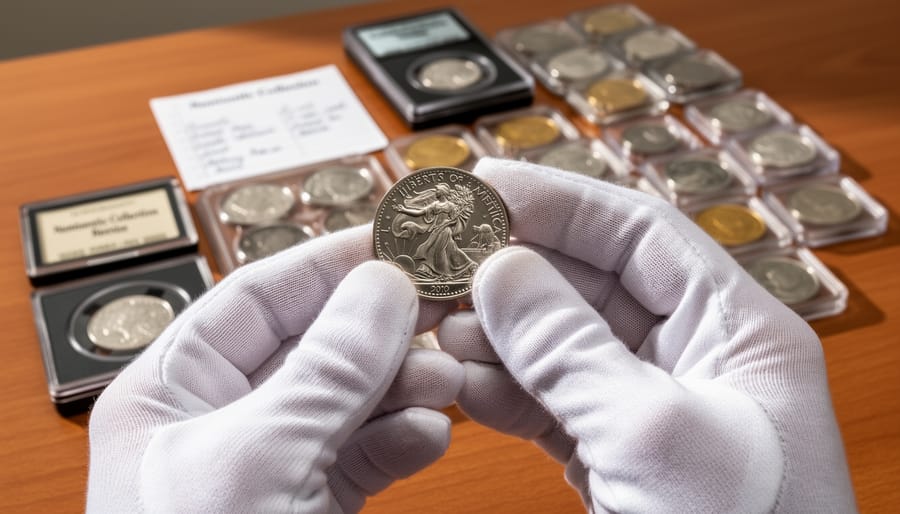
Understanding what makes one penny worth face value and another worth hundreds, or even thousands, requires looking at four interconnected factors. These elements work together to determine whether a coin belongs in circulation or deserves a protective case.
Rarity tops the list as the foundation of value. Mintage numbers tell you how many coins were originally produced in a given year and variety. The 1891-dated coins, with their total mintage of 1,452,500, are considerably scarcer than pennies from years when millions entered circulation. Lower mintage creates scarcity, and scarcity drives collector interest. But rarity alone doesn’t guarantee value, a rare coin that nobody wants remains affordable, which is where demand enters the picture.
Condition dramatically affects what collectors will pay. Grading measures how much wear a coin has suffered and whether it retains original details. A heavily circulated penny might show base-level retail values of a few dollars, while an identical date in pristine condition can command exponentially more. The difference between a worn example and a sharp, uncirculated specimen often separates a $5 coin from one selling for hundreds. Professional grading services assign numerical grades that help standardize condition assessment, though learning to evaluate coins yourself is a valuable skill.
Variety identification separates similar-looking coins with vastly different values. Design differences, sometimes as subtle as leaf size or date placement, create distinct collectible types. The ‘H’ mintmark on certain years, for instance, indicates coins struck at a specific facility and can affect desirability. Collectors pay premiums for scarce varieties even when the base year is relatively common.
Demand ties everything together. A coin might be rare and well-preserved, but if collectors aren’t actively seeking it, prices stay modest. Current values are determined by year, coin varieties, and specific grade, with market activity constantly shifting what buyers will pay. Auction listings show buy now prices of $1,700.00 for premium examples of highly sought-after dates, while less popular rarities trade for far less. Checking recent auction price examples gives you a realistic sense of current market appetite.
The interplay matters more than any single factor. A moderately rare date in exceptional condition with strong collector demand will outperform a truly scarce coin that’s damaged or unpopular. Learning to evaluate all four elements together helps you understand why one penny sits in your pocket change while another belongs in a serious collection.
How to Start Your Canadian Penny Collection
Starting a Canadian penny collection doesn’t require a huge investment or specialized knowledge. You can begin right at home by checking the coins already in your possession. Look through old jars of change, ask relatives if they have any Canadian pennies tucked away in drawers, and explore family collections that might have been forgotten in attics or basements. Estate sales and garage sales can be surprisingly productive hunting grounds, especially when sellers haven’t sorted through coin collections themselves.
Once you’ve gathered some pennies to examine, you’ll want a few basic tools. A magnifying glass helps you spot varieties and check for mint marks like the ‘H’ that appears on certain coins. Good lighting is essential, natural daylight or a bright desk lamp makes details visible. You don’t need expensive equipment to start; a simple jeweler’s loupe and a coin reference book will serve you well. Many collectors also use soft cotton gloves to handle valuable specimens, though this becomes more important as your collection grows.
Here’s a practical approach to organizing your search:
- Sort pennies by year, grouping them in decades to make patterns visible
- Check mintage numbers online to identify which years are worth closer inspection
- Look for varieties like the Large Leaf with Large Date once you’ve isolated key years
- Set aside any pennies in exceptional condition, even from common years
- Research current values for promising finds before making storage decisions
Storage matters more than beginners often realize. Never clean old coins, it damages their surface and destroys value. Instead, keep them in acid-free holders, coin flips, or archival-quality albums. For pennies you’re simply examining rather than preserving as investments, simple organizing trays work fine.
Display options open creative possibilities, especially if you enjoy handmade crafts. Shadow boxes let you arrange pennies by era or theme, creating wall art that tells a story. You can display in painted jars for a charming vintage look on shelves. Framed presentations under glass protect coins while making them conversation pieces. Crafters often design custom mounts using wood, fabric backings, or decorative matting that complements the historical feel of the collection.
Coin shows and local numismatic clubs offer another dimension. You’ll meet experienced collectors willing to share knowledge, see specimens you’d never encounter otherwise, and learn proper grading by handling coins across different conditions. These communities welcome beginners and create opportunities to acquire specific dates you’re seeking. The hobby expands beyond solitary searching when you connect with others who appreciate the history behind each penny.
The Intersection of Coin Collecting and Handmade Crafts
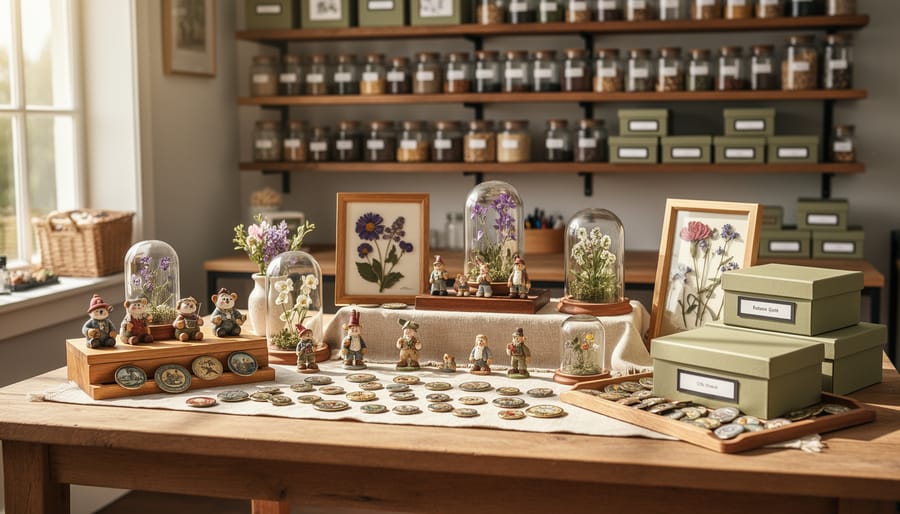
Coin collectors and crafters share a common appreciation: both understand the value of handmade items that tell stories and preserve moments in time. This overlap has created opportunities for artisans who design custom displays and presentation pieces that transform numismatic collections into showcased treasures.
Shadow boxes built from reclaimed wood make stunning wall-mounted displays for rare pennies. Crafters often create compartmentalized frames with glass fronts, labeling each coin by year and variety. These pieces double as conversation-starting décor while protecting valuable specimens from handling and environmental damage. Some artisans incorporate complementary elements, vintage maps of Canada, historical photographs from the coin’s era, or hand-lettered descriptions explaining what makes each penny special.
Custom coin albums offer another creative avenue. Unlike mass-produced plastic holders, handmade albums crafted from leather, linen, or decorative paper add an heirloom quality to a collection. Artisans who understand how to store and care for delicate items design these albums with acid-free materials and protective pockets that won’t damage coins over time.
The business potential here is genuine. Collectors seeking presentation pieces often prefer purchasing from independent makers who customize dimensions, finishes, and organizational systems to match specific collections. Display cases for high-value coins, like those 1891 pennies or dot varieties, justify premium pricing when craftsmanship meets protective function.
Jewelry designers have explored incorporating damaged or common-date pennies into wearable art, creating pendants and earrings that celebrate Canadian history without depleting the supply of genuinely rare specimens. This approach respects the collecting community while opening creative possibilities.
For crafters interested in this niche, understanding what collectors value in presentation helps you turn passion into profit. Products that protect, organize, and beautifully display collections fill a real need in a community that takes preservation seriously.
Common Questions About Rare Canadian Pennies
How can I tell if my Canadian penny is valuable?
Check the date first, certain years like 1891 and dot varieties from 1936 are immediately noteworthy. Then examine the coin’s condition and look for varieties like the Large Leaf with Large Date design differences. Coins in better condition with lower mintage numbers hold more value.
Should I clean my old pennies before trying to sell them?
Never clean coins you think might be valuable. Cleaning removes the original surface patina and can dramatically reduce a coin’s worth to collectors, even if it makes the penny look shinier to your eye.
Where can I find current values for my Canadian pennies?
Look for pricing guides that list current values by year, coin varieties, and specific grade. These resources typically show approximate base-level retail values in circulated grades, with better-condition examples commanding higher prices, some premium specimens appear at auction with buy now prices reaching $1,700.00.
How do I learn to grade my coins properly?
Start by studying grading photos in collector guides that show the same coin type at different grade levels. You’ll learn to spot the wear patterns that distinguish a well-worn penny from one in better condition, though professional grading services handle authentication for high-value pieces.
Beyond these common questions, beginners often wonder about the best places to sell rare finds. Coin shows connect you directly with collectors and dealers who understand Canadian varieties, while online auction platforms reach a wider audience. Estate sales and coin shops offer immediate options, though prices vary based on the buyer’s knowledge and current demand.
The grading process intimidates many newcomers, but you don’t need expert-level skills to spot potentially valuable pennies in your collection. Focus on recognizing key dates and obvious varieties first. As you handle more coins and compare them to reference images, you’ll develop an eye for the subtle differences that matter. Most Canadian pennies are quite common and worth little over face value in worn condition, so don’t expect every old penny to be a treasure, but the many valuable Canadian pennies that do exist make the search worthwhile.
Storage matters more than most beginners realize. Keep promising finds in individual holders or flips that prevent scratching and environmental damage. Avoid PVC-based plastics, which can cause chemical reactions over time. Proper storage preserves both the coin’s condition and your investment, whether you’re building a personal collection or preparing pieces for eventual sale.
Searching through old penny jars might not uncover a fortune in every handful, but the hunt itself connects you to decades of Canadian history. Each coin tells a story, from the 1891 pennies with their modest mintage of 1,452,500 to the legendary dot varieties that collectors dream about finding. Yes, most pennies you’ll encounter are common, worth little more than face value in circulated condition. But that one rare variety sitting unnoticed in a drawer? That’s the possibility that makes this hobby so compelling.
For the crafting community, these small copper treasures offer more than monetary value. They become focal points in handmade shadow boxes, conversation pieces in artistic displays, and tangible links to the past that you can hold in your hand. Whether you’re examining coins for the Large Leaf variety or simply appreciating the craftsmanship of historical currency, you’re participating in a tradition that values both discovery and preservation.
Check those old coins. Start looking at dates and details. You might just find something special waiting to be rediscovered in 2026.