
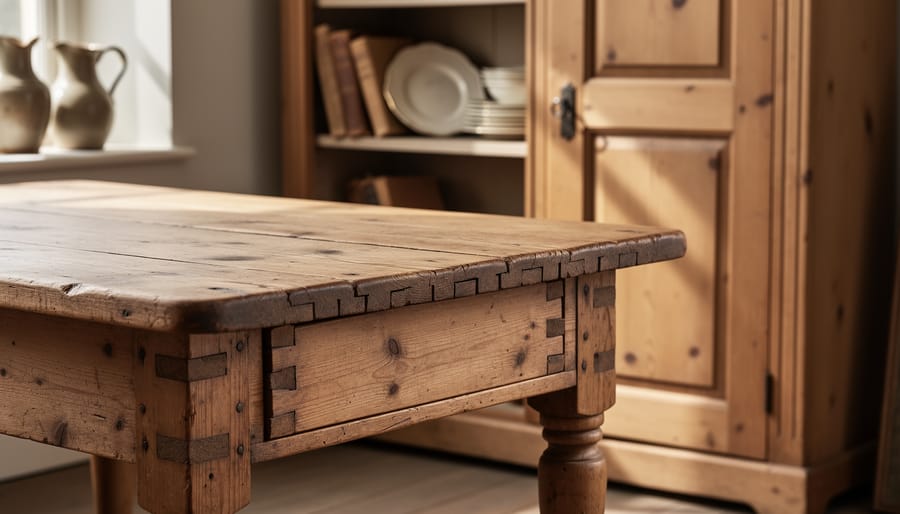
8 Timeless Antique Pine Furniture Pieces Every Collector Should Know
Antique pine furniture offers collectors an approachable entry into heritage pieces, with most desirable items ranging from farmhouse tables to cupboards priced around $1,200 in the current Canadian market. Pine’s softer wood and widespread use in everyday 18th and 19th-century pieces means you’ll find more accessible prices than oak or mahogany antiques, yet the craftsmanship tells equally compelling stories of rural life and handmade traditions.
What makes pine furniture particularly appealing right now is its honest character. Unlike formal parlor pieces meant to impress guests, pine items were the workhorses of farmhouses, general stores, and kitchens. Craftsmen built these pieces without pretense, using dovetail joints, hand-planed boards, and simple hardware that reveal their maker’s skill. The wood itself ages beautifully, developing a warm honey patina that darkens over decades and shows every dent and worn edge as a badge of authentic use.
For crafting enthusiasts who appreciate why buy handmade objects hold lasting value, antique pine represents the ultimate handmade heritage. Each piece required hours of hand sawing, planing, and joinery before power tools existed. Collecting them connects you directly to that tradition while offering furniture you can actually use and restore.
Finding quality pieces takes some knowledge. Ontario’s Carp Road Flea Market in Stittsville stocks pine and mahogany antiques alongside vendors who can share provenance details, while shops like J’s Antique & Curiosity Shop in Markham offer curated selections. The key is learning to spot original hardware, hand-cut dovetails, and wood grain patterns that confirm age and authenticity before you buy.
How We Selected These Pine Treasures
Choosing these eight pine pieces wasn’t random, we focused on what makes sense for collectors entering the market in 2026, balancing historical importance with practical realities. Each piece needed to meet specific criteria that reflect how people actually collect and live with antique pine today.
Historical significance came first. We selected furniture types that played genuine roles in 19th and early 20th-century households, not decorative novelties. These are the workhorses that families depended on, which means they exist in sufficient numbers for collectors to find without hunting for years.
Market availability shaped our list considerably. We looked at real venues where collectors browse, places like Stittsville’s Carp Road Flea Market, known for pine and mahogany antiques, and specialist shops including J’s Antique & Curiosity Shop in Markham, Ontario. The pieces featured here turn up regularly at estate sales, online marketplaces, and dealer inventories, not just in museum collections.
Price accessibility mattered because pine’s appeal lies partly in being more approachable than hardwood antiques. Current Ontario listings show quality pine pieces around $1,200, positioning them within reach for collectors who aren’t ready to invest thousands in a single item. We prioritized furniture types typically priced for emerging enthusiasts rather than deep-pocketed investors.
Functional versatility sealed the selection. Every piece works in contemporary homes, you can actually use these antiques, not just display them. A farmhouse table still gathers people for meals; a corner cupboard still stores dishes.
Finally, we chose pieces with distinctive pine characteristics that help newcomers authenticate what they’re buying: visible grain, hand-planed surfaces, natural aging patterns that reproductions struggle to fake convincingly.
1. The Pine Blanket Chest, Your Gateway to Collecting
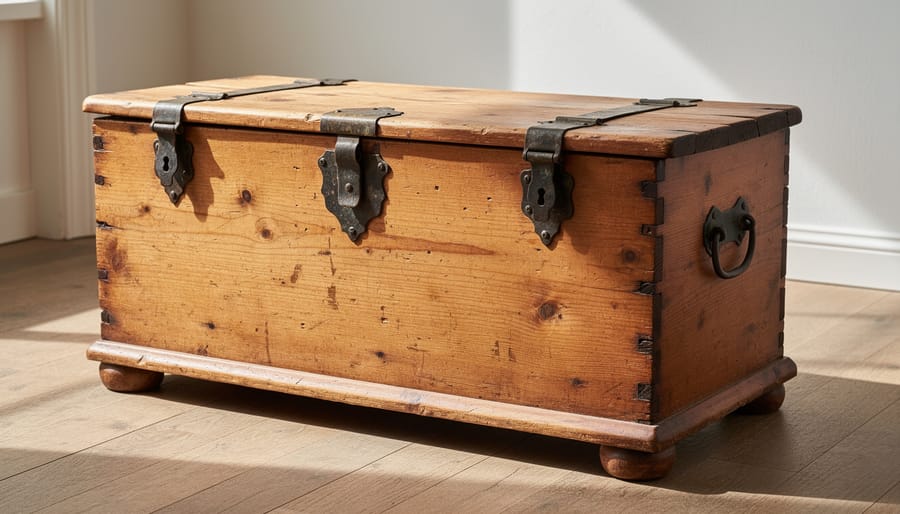
The blanket chest stands as the perfect first acquisition for anyone entering the world of antique pine furniture. These sturdy storage boxes served every household from the 1700s through the early 1900s, holding linens, quilts, and cherished possessions in bedrooms and at the foot of beds. Their widespread use means you’ll find them at markets and estate sales regularly, often at prices that won’t require a second mortgage.
What makes a blanket chest genuinely antique? Start by examining the joinery. Turn it over and look at the corners, authentic pieces feature hand-cut dovetail joints where the front and sides meet. These dovetails won’t be perfectly uniform like machine-cut versions. The pins and tails show slight variations in width and spacing, evidence of a craftsman’s saw and chisel rather than factory precision. Run your fingers along the interior surfaces; you’ll feel the subtle ripples left by hand planes, never the flawless smoothness of modern sanding.
Original hardware tells its own story. Iron hinges show forge marks and irregular surfaces. Lift the lid, if the hinges are attached with hand-forged nails or clinched pins rather than modern screws, you’re likely holding something authentic. The patina develops over decades of handling, creating darker areas around the edges and lid where hands repeatedly touched the wood.
A Toronto collector I spoke with last year discovered her gateway piece at a Saturday flea market, a simple pine chest with worn blue paint and loose hinges, priced at $180. She learned to identify legitimate wear: smooth, rounded edges from genuine use rather than the sharp, artificially distressed corners that reproductions often display. That first chest sparked a collection that now fills three rooms, but she insists the thrill of that initial find remains unmatched.
2. The Farmhouse Dining Table, Heart of the Home
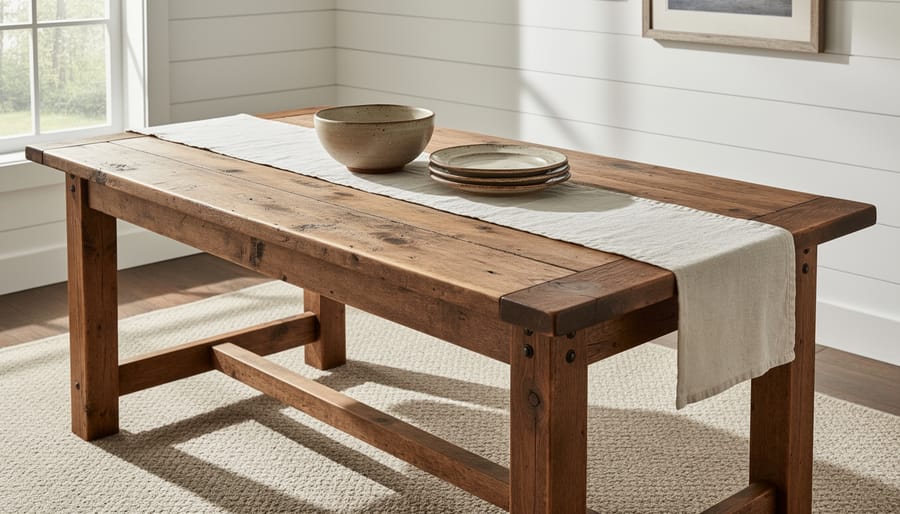
The pine farmhouse table stands as perhaps the most iconic piece in antique pine collecting, and for good reason. These substantial work surfaces served as the literal and figurative center of household life for generations, witnessing family meals, homework sessions, bread-making marathons, and countless conversations. That history lives on in every scratch, stain, and worn groove.
Construction tells you everything about a table’s age and origin. Authentic farmhouse tables feature thick plank tops, often a single wide board or two to three planks joined together, crafted from old-growth pine that’s tighter-grained than modern lumber. Look underneath: hand-planed surfaces show subtle irregularities and tool marks that machine planing can’t replicate. The joinery matters too. Mortise-and-tenon connections secured with wooden pegs signal traditional craftsmanship, while metal brackets suggest later manufacturing.
Base styles vary by region and era. Trestle designs with their sturdy H-frame supports dominated early American and Canadian farmhouses because they allowed seating along both sides without leg interference. Four-leg and turned-leg tables became more common in the Victorian period, often featuring decorative elements like chamfered edges or simple carved details. Canadian examples tend toward practical simplicity with minimal ornamentation, while some American tables incorporated more decorative turnings.
The wear patterns reveal authenticity better than any maker’s mark. Genuine use creates a subtle dish in the tabletop where countless arms rested during meals. The edges show rounded corners from years of contact. Original finish wears away naturally in high-touch areas while remaining intact in protected spots underneath. This patina can’t be convincingly faked, reproduction distressing looks random rather than concentrated where hands and dishes actually landed.
In contemporary homes, these tables anchor kitchens and dining rooms with unmatched character. Their generous proportions accommodate modern gatherings while their weathered surfaces forgive the inevitable spills and bumps of daily life.
3. The Jelly Cupboard, Compact Character
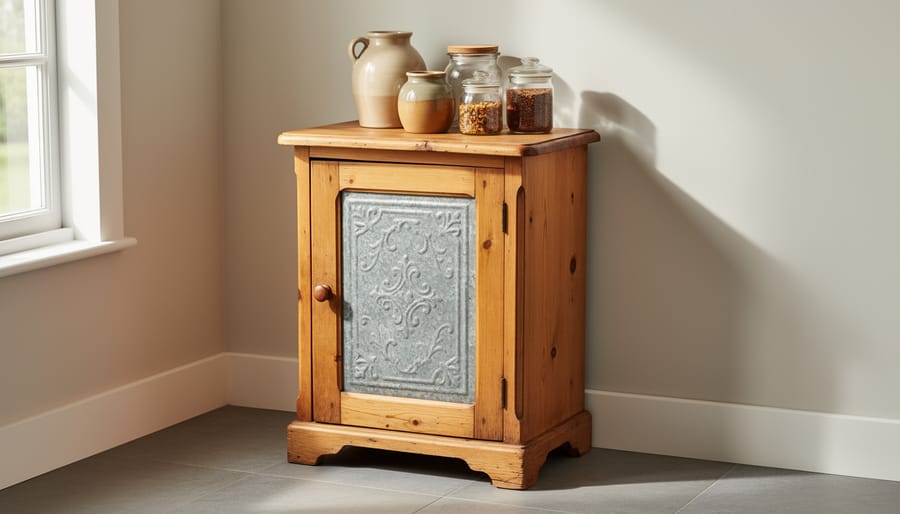
The jelly cupboard earned its humble name from its original purpose: storing preserved fruits, jams, and pies in a cool, ventilated space before refrigeration became standard. These compact cabinets typically stand between three and four feet tall, making them perfectly sized for narrow kitchens or cramped corners where larger furniture simply wouldn’t fit. That same modest footprint makes pine jelly cupboards ideal for today’s apartments and smaller homes, where they work beautifully as bathroom storage, bar cabinets, or entry consoles without overwhelming the space.
What sets jelly cupboards apart visually are the punched tin panels or screened doors that allowed air circulation while keeping insects away from stored food. These panels often feature decorative patterns, stars, hearts, geometric designs, punched by hand into the tin, creating functional folk art. Pine versions are particularly sought after because the soft wood allowed craftsmen to create more elaborate door frames and decorative trim without the specialized tools hardwoods demanded. The warm honey tones of aged pine also complement the silvery patina of original tin panels in a way darker woods simply can’t match.
Expect to pay anywhere from $400 for a basic single-door example needing minor work to $1,200 or more for pristine two-door cupboards with original hardware and intact tin. When considering restoration, preserve original tin panels whenever possible, replacements destroy both value and authenticity. Refinishing the pine is more forgiving; a gentle cleaning often reveals beautiful character that overzealous stripping would erase. Check that doors hang properly and shelves remain secure, but embrace the small dents and worn edges that prove generations of use.
4. The Washstand, Victorian Utility Meets Modern Style
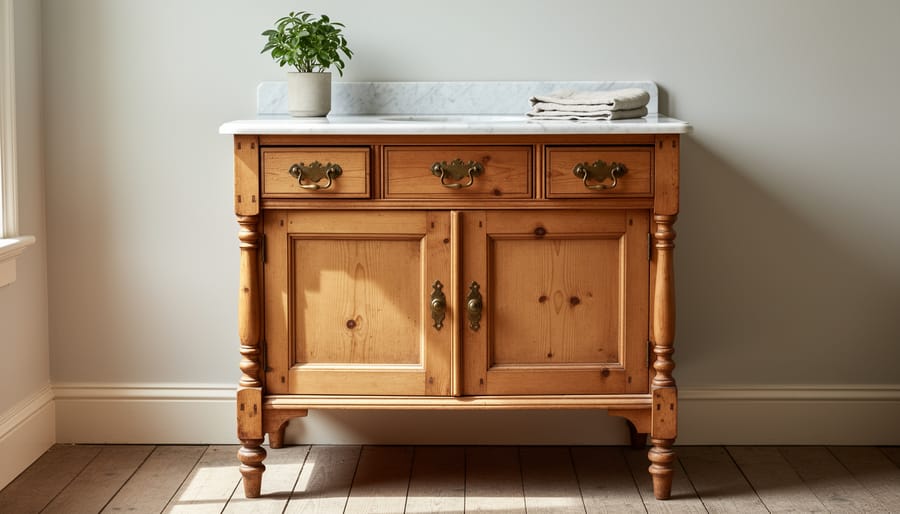
Before indoor plumbing became standard, the washstand was indispensable, every bedroom needed one. Victorian-era pine washstands held a porcelain pitcher and basin, offering a place for morning ablutions when running water remained a luxury reserved for the wealthy. By the 1880s through early 1900s, these practical pieces had evolved into more decorative forms with towel bars, small drawers for toiletries, and lower cabinets concealing chamber pots. Today’s collectors prize pine washstands precisely because they bridge utility and style while fitting spaces where larger antiques overwhelm.
Authentic pine washstands typically stand 30 to 36 inches tall with a gallery back (raised edges protecting walls from splashes) and a circular cutout where the basin sat. Look for original porcelain or brass hardware pulls, which often show wear patterns from decades of daily use. Some higher-end examples feature marble or granite tops, these command premium prices but offer stunning contrast against pine’s warm honey tones. The towel bar, usually mounted on turned posts extending from the sides, should show genuine age through smooth wear where hands gripped it thousands of times.
Authentication hinges on construction details. Victorian-era washstands use mortise-and-tenon joinery or wooden pegs rather than modern screws. Check the back panel, it should be unfinished or show old paint, never evenly stained like the front. Water stains around the basin cutout actually confirm authenticity, though excessive rot indicates structural problems.
These compact pieces repurpose brilliantly in modern homes. A pine washstand becomes a charming bathroom vanity with plumbing modifications, a bar cart with vintage appeal, or an entryway station for keys and mail. Their modest footprint and vertical storage make them perfect for small spaces where a full dresser won’t fit.
5. The Dry Sink, Rustic Functionality
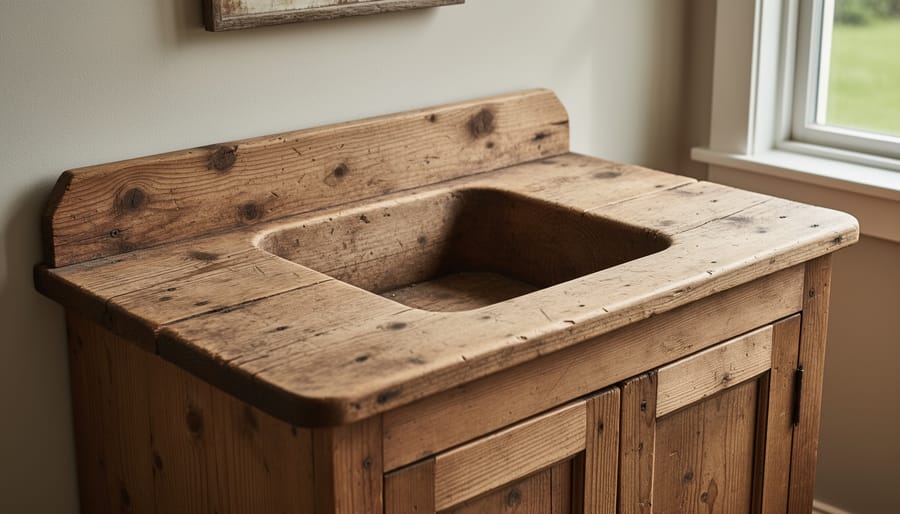
The dry sink stands apart from other pine antiques with its unmistakable working-class heritage. Originally designed for kitchens and sculleries before indoor plumbing became standard, these functional pieces featured a recessed well in the top surface where washbasins sat, with a lower cabinet for storing water pitchers, soap, and towels. That practical design, born from necessity, now delivers exactly the rustic authenticity that collectors and decorators seek in 2026.
What makes dry sinks particularly interesting is how their construction reveals regional differences across North America. Pennsylvania Dutch examples often showcase elaborate cutout designs in the backsplash and decorative brackets, while Canadian dry sinks from Ontario and Quebec tend toward simpler, utilitarian lines with solid side panels. New England versions frequently incorporated a narrow shelf above the basin well for candles or small items. These variations help trace a piece’s origins and add to its story.
Collectors specifically hunt for dry sinks that retain their original metal linings, zinc was most common, though copper appeared in wealthier households. An intact lining significantly increases value and confirms authenticity, as reproductions rarely bother with this detail. Even a damaged original lining matters more than a perfect replacement.
The challenge with pine dry sinks lies in their history of water exposure. Check carefully for water stains, warping, and splits in the wood around the basin area. Soft spots indicate rot that compromises structural integrity. The cabinet doors and lower shelves often show water damage at the bottom edges where spills pooled over decades of use. Some wear adds character; extensive rot requires costly restoration or makes a piece unsuitable for purchase.
In farmhouse-style and rustic interiors, a dry sink anchors a room with immediate visual weight and historical presence that new furniture simply can’t replicate.
6. The Harvest Bench, Simple Elegance
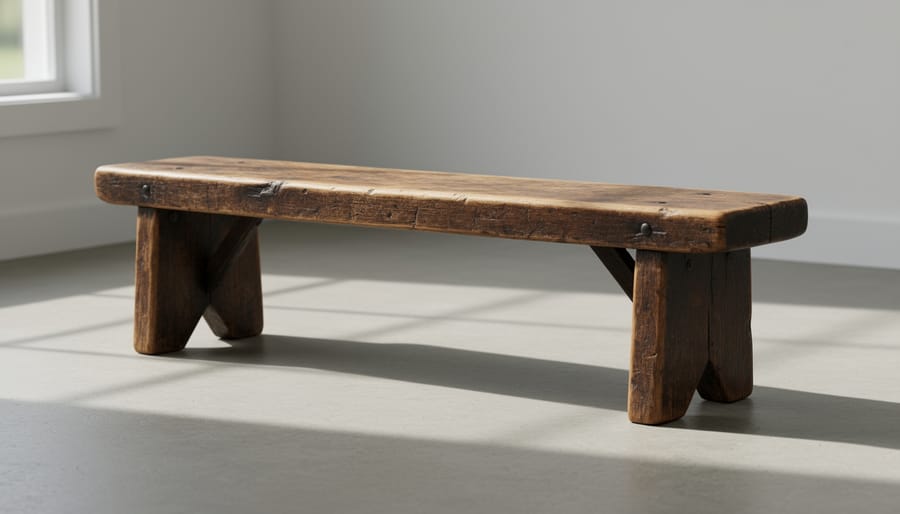
The harvest bench represents pine furniture at its most honest. These long, narrow seats once lined the walls of communal dining halls, churches, and farmhouse kitchens where families gathered for meals and conversation. Unlike formal parlor furniture, harvest benches were built for daily use by working hands, which makes their survival, and the stories etched into their surfaces, all the more remarkable.
Most antique pine benches feature straightforward construction: a solid plank seat supported by simple bracket legs or trestle ends, sometimes with a stretcher for added stability. This simplicity isn’t laziness; it reveals the maker’s skill. Without elaborate joinery or decorative carving to hide mistakes, every cut and fit had to be precise. Look for through-tenon construction where pegs pass completely through the seat, or mortise-and-tenon joints that have held tight for over a century.
The real beauty lies in authentic wear patterns. Genuine antique benches show a gentle depression along the seating surface where countless people sat, with heavier wear near the center. Edges are smooth and rounded from years of hands gripping them to stand. The underside often retains tool marks, plane strokes or saw cuts that machine-made reproductions can’t replicate convincingly.
Artificial distressing, by contrast, looks random and overdone. Chains whipped across surfaces create uniform dents that don’t match natural use patterns. Edges are gouged rather than softly worn. If a bench shows heavy distressing on top but crisp, sharp edges underneath, that’s a red flag.
In modern homes, harvest benches prove remarkably versatile. They work beautifully in hallways, at the foot of a bed for laying out clothes, or pulled up to a dining table when you need extra seating. Their narrow profile fits where chairs won’t, and that lived-in patina adds character that complements both rustic and contemporary spaces.
7. The Corner Cupboard, Architectural Character
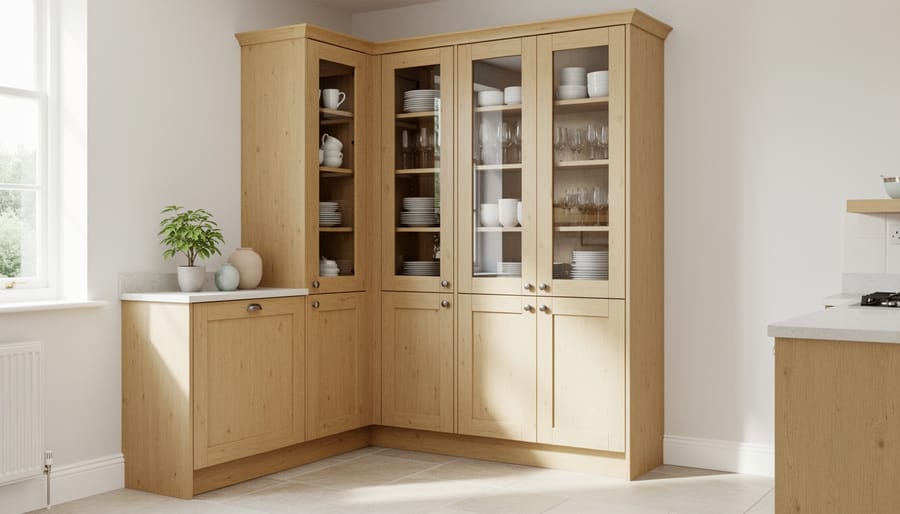
Corner cupboards represent one of the most architecturally significant pieces in antique pine furniture, originally designed to fit flush into home corners before clever craftsmen began producing freestanding versions. These space-maximizing designs transformed awkward corner spaces into functional storage while adding vertical visual interest that draws the eye upward, a trick interior designers still employ today.
The typical pine corner cupboard features a two-piece construction: an upper section with glass-paned doors for display and a solid lower cabinet for concealed storage. The glass door variations tell you much about the piece’s age and origin. Earlier examples often sport wavy, hand-blown glass panes set in simple muntins, while later 19th-century pieces may have larger glass panels with more elaborate glazing patterns. Some retain their original handmade nails securing the back panels, a detail that confirms authenticity.
What makes pine corner cupboards particularly appealing is their decorative potential at accessible price points. While a mahogany corner cupboard might command several thousand dollars, pine examples deliver equally dramatic presence for a fraction of the cost. The lighter wood actually works to your advantage in smaller rooms, reflecting light rather than absorbing it. Look for pieces with original crown molding, fluted pilasters flanking the doors, or scalloped shelving edges, these details separate exceptional examples from plain utility pieces.
The display-versus-storage question matters more with corner cupboards than most antiques. That glass-fronted upper section practically begs to showcase collections, vintage dishes, blue-and-white pottery, or craft supplies arranged artfully. The enclosed lower cabinet handles the less photogenic necessities. This dual function makes corner cupboards workhorses in modern homes, bridging decorative impact with genuine utility while occupying floor space that would otherwise go unused.
8. The Apothecary Cabinet, Treasure Hunter’s Dream
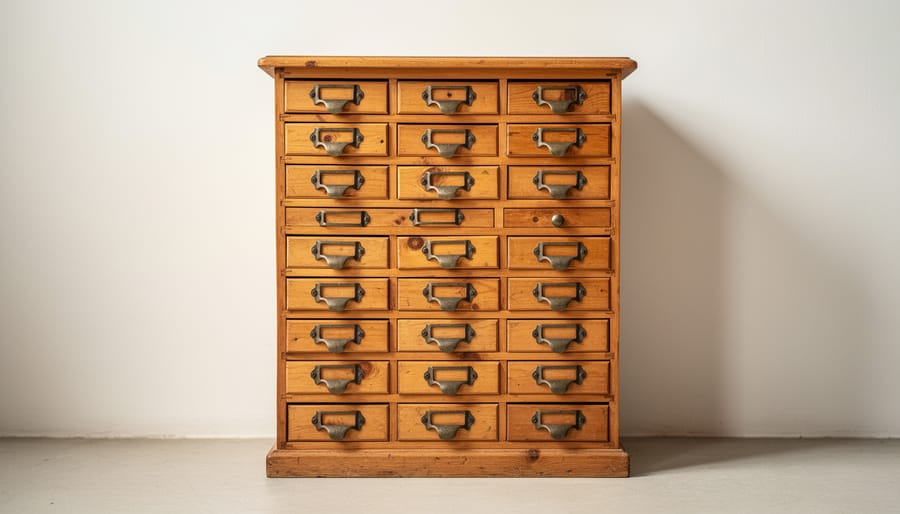
Walking into a shop and seeing a wall of tiny drawers staring back at you triggers something primal in collectors, a need to open every single one and discover what treasures might be hiding. That’s the magic of antique pine apothecary cabinets, those towering workhorses that once organized medicines, seeds, hardware, or dry goods in pharmacies and general stores across North America. Today, these multi-drawer beauties command attention in any room while solving the eternal problem of where to stash life’s small essentials.
The commercial origins show in their construction. Unlike delicate bedroom furniture, these cabinets were built to withstand daily use by multiple hands reaching for inventory hundreds of times each day. Original examples feature anywhere from twelve to sixty drawers, each with hand-cut dovetails at the corners and solid pine backs. Pull out a drawer and flip it over, factory pieces from the early 1900s used machine-cut dovetails, while earlier handmade versions show slight irregularities that prove human craftsmanship.
Hardware tells half the story. Original brass or iron pulls develop a distinct patina that’s nearly impossible to fake convincingly. Check whether all pulls match or show period-appropriate variations, a cabinet that served decades in a working pharmacy might have replacement pulls from different eras, which actually adds to its documented history rather than diminishing value.
Complete, unaltered examples with all original drawers intact fetch premium prices because many cabinets were cannibalized over the years or had drawers lost to damage. If you’re building dealer relationships or scouting online marketplaces ask specifically about drawer count and originality.
Modern uses run wild with creativity: craft supply organization, spice storage in restaurant-style kitchens, jewelry displays for those who where to sell handmade goods, or simply as a conversation-starting focal point. The visual drama of all those drawers transforms a blank wall into something with depth and story.
Where to Find Antique Pine Furniture in 2026
Finding authentic antique pine furniture requires knowing where to look and building relationships with reliable sources. The market in 2026 offers diverse channels, from bustling outdoor venues to specialized shops and digital platforms.
Flea markets remain treasure troves for pine hunters willing to arrive early and negotiate. The Carp Road Flea Market in Stittsville has built a reputation for pine and mahogany antique furniture, drawing both casual browsers and serious collectors. These open-air markets typically offer better prices than formal antiques shops because dealers work on volume and quick turnover. Visit regularly, since inventory changes weekly, and carry cash for immediate deals.
Specialist antique shops provide curated selections with more authentication guarantees. J’s Antique & Curiosity Shop in Markham, Ontario, represents the type of established dealer who can verify provenance and answer detailed questions about construction methods and regional origins. These shops often price higher than flea markets, but you’re paying for expertise and some level of return protection. Many specialists will source specific pieces if you describe what you’re seeking.
Estate sales offer opportunities to find pine furniture still in family homes, often at reasonable prices before pieces reach the dealer circuit. Monitor local estate sale companies and attend preview hours when possible. The best finds happen when families simply want to clear a house quickly rather than maximize every dollar.
Online marketplaces have expanded access dramatically, but require careful vetting. Request detailed photos showing joinery, hardware, and wear patterns from multiple angles. Ask sellers direct questions about provenance and condition. Be wary of prices that seem too good for described condition, which often signals reproductions or significant undisclosed damage.
To maximize your sourcing success, follow these proven strategies:
- Attend seasonal flea markets early in the morning when dealers are still unpacking fresh inventory
- Build relationships with dealers who will call you when pine pieces arrive before they hit the floor
- Join regional collector groups where members share leads and authenticate questionable pieces
- Monitor estate sale company websites and sign up for their email alerts in your area
- Verify online seller credentials through reviews, return policies, and willingness to provide additional documentation
Regional availability varies considerably. Ontario and Quebec offer abundant Canadian pine pieces, while Maritime provinces yield distinctive regional styles. Rural areas generally provide better selection and pricing than urban centers, where demand drives costs higher. Consider weekend road trips to smaller towns where antique shops cluster along main streets.
Proper humidity control becomes crucial once you bring pieces home, but sourcing from climate-controlled shops reduces risk of already-damaged wood. Ask dealers about storage conditions, especially for pieces that show checking or warping.
Networking matters more than most beginners realize. Strike up conversations at markets, exchange contact information with dealers whose eye you trust, and mention what you collect. The antiques world runs on relationships, and dealers remember buyers who appreciate their knowledge and pay fairly. That Georgetown dealer listing a piece at $1,200 might negotiate differently with someone they’ve sold to before versus a first-time buyer. Building a reputation as a serious collector who closes deals opens doors to preview opportunities and first-refusal rights on incoming inventory.
Caring for Your Pine Antiques
Pine’s softer wood demands a gentler approach than hardwood antiques. The first rule: resist the urge to make your piece look “like new.” That honey-colored patina and those honest wear marks are exactly what collectors value, and aggressive cleaning strips away decades of character along with the finish.
For regular maintenance, use nothing harsher than a barely-damp cloth to remove surface dust. Never spray commercial furniture polish directly onto pine, the solvents can penetrate the porous wood and leave permanent clouding. If you must use anything beyond water, choose a product specifically formulated for antique wood, applied sparingly to your cloth first, not the furniture. Once or twice a year, a thin application of paste wax (not liquid) protects the surface without obscuring the wood’s natural aging.
Humidity control matters more for pine than most hardwoods. Keep your pieces away from heating vents, fireplaces, and exterior walls where temperature swings are greatest. In Canadian winters especially, dry indoor air can cause splitting, while summer humidity makes pine swell. A simple room humidifier or dehumidifier prevents the dramatic movement that loosens joints and cracks panels.
Minor dents often respond to a traditional remedy: place a damp cloth over the dent and apply a warm (not hot) iron. The steam causes the compressed wood fibers to swell back up. For scratches, a matching wax stick conceals damage without refinishing. Deep gouges are best left alone unless they compromise structural integrity, they’re part of your piece’s story.
Watch for small holes or fine sawdust, signs of active wood-boring insects. If you spot these, isolate the piece immediately and consult a conservator before attempting treatment. Refinishing should be your last resort, reserved only for pieces with severe finish failure. The moment you sand away that original surface, you’ve permanently reduced both historical value and collector appeal.
Common Questions About Collecting Antique Pine
New collectors often have similar concerns when they start exploring antique pine furniture. These questions come up repeatedly at markets, in dealer conversations, and among collecting communities, here are straightforward answers based on practical experience.
How can you tell if pine furniture is truly antique?
Look for hand-cut dovetail joints with slight irregularities, oxidized patina that penetrates the wood rather than sitting on the surface, and wear patterns that make sense, edges rounded where hands actually touched, feet worn where they dragged across floors. Modern pieces show machine precision and artificial distressing that looks random rather than functional.
What’s a reasonable price range for beginners?
Expect to pay between $400 and $1,200 for solid starter pieces like blanket chests, washstands, or smaller cupboards in Ontario markets. Simpler items like benches or stools might run $200 to $500, while larger statement pieces like dining tables or apothecary cabinets can reach $1,500 to $3,000 depending on condition and provenance.
Is pine as valuable as hardwood antiques?
Generally no, pine pieces sell for significantly less than comparable mahogany or walnut furniture, which makes them accessible entry points for new collectors. However, exceptional examples with documented history, original paint, or rare forms can command premium prices, and pine’s affordability doesn’t diminish its historical importance or aesthetic appeal.
Should you restore or leave original condition?
Preserve rather than restore whenever possible. Original patina, even worn paint, and honest wear add authenticity and value that refinishing destroys permanently. Clean gently, stabilize structural issues, but resist the urge to make old furniture look new, collectors prize pieces that show their age gracefully.
Distinguishing Canadian from American pine pieces requires attention to construction details and hardware. Canadian furniture often features different proportions, slightly narrower, taller case pieces reflecting British Colonial influence, while American examples tend toward wider, more robust forms. Hardware styles varied by region and era, with Canadian pieces sometimes showing British imports alongside locally-made components. Provenance documentation helps, but realistically, many pine pieces lack clear origins. Focus on quality and condition rather than getting too caught up in nationality unless you’re building a specifically regional collection.
The reproduction question troubles many beginners. Quality reproductions serve a purpose, they provide the look without the fragility or price of genuine antiques. Problems arise when sellers misrepresent reproductions as authentic pieces. If you knowingly buy a well-made reproduction for functional use at an honest price, that’s a legitimate choice. Just understand you’re purchasing décor, not a historical artifact or investment piece. The issue isn’t reproduction itself but transparency. When in doubt about authenticity, buy from established dealers who guarantee their attributions or bring along an experienced collector friend to flea markets and estate sales until you develop your own eye for the real thing.
Antique pine furniture occupies a special place in the collecting world that more prestigious hardwoods simply can’t match. These pieces are touchable history, affordable enough to actually use, honest enough to show their age without apology, and beautiful in a way that celebrates the wood’s natural character rather than hiding it. The dovetails cut by a rural cabinetmaker in 1880, the gentle dips worn into a table by generations of family meals, the patina built up over decades, these aren’t flaws. They’re the fingerprints of real lives and real craftsmanship.
Starting your collection doesn’t require a trust fund or an advanced degree in antiques. It requires curiosity, a willingness to learn as you go, and an appreciation for furniture that was built to last by people who understood their material. Every pine blanket chest, farmhouse table, or jelly cupboard you bring home connects your space to the hands-on woodworking traditions that shaped our homes before mass production took over. New furniture can be perfect, but it’ll never have a past. Your pine antiques already do.