Free Easy Crochet Shawl Patterns That Actually Work for Beginners
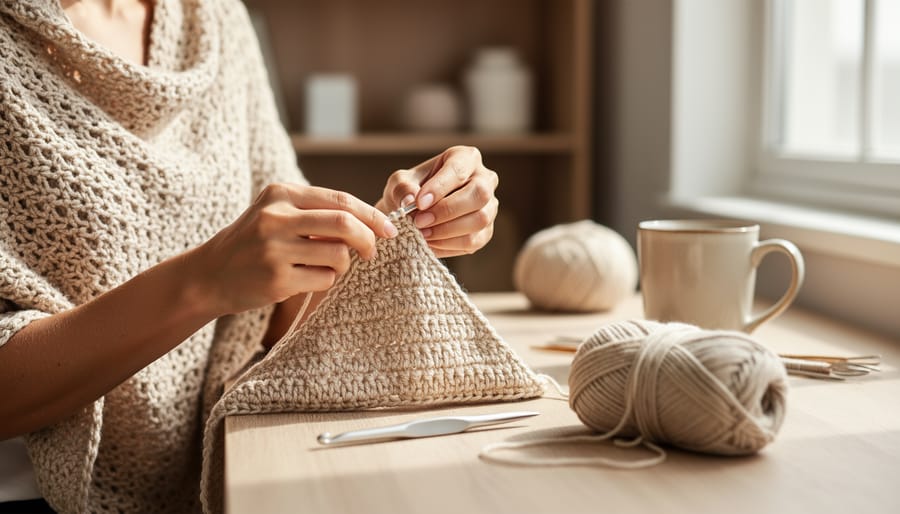
Free shawl crochet patterns are genuinely beginner-friendly when they rely on basic stitches, repetitive rows, and simple rectangular or triangular construction. You’ll find quality no-cost patterns on platforms like Ravelry and Etsy (many shops offer instant PDF downloads at zero charge), and the best beginner designs require only single crochet, double crochet, or chain stitches worked in straightforward sequences that build your confidence with every row.
If you’ve already tried easy crochet blanket patterns you already have the skills for most shawl projects. The difference? Shawls work up faster because they’re smaller, and they’re wonderfully forgiving since drape hides minor tension inconsistencies that might show in a blanket.
The trick is knowing what “easy” actually means in crochet pattern language. Truly beginner-appropriate shawls start from a point or edge and grow through increases at predictable intervals. You won’t wrestle with complicated stitch counts or confusing charts. Many crafters finish their first shawl in a weekend, spending just a few hours working through yarn that transforms into something wearable and giftable.
Sarah, a crocheter from Ontario, told me she made three prayer shawls for her church group using free patterns before she ever attempted a sweater. “I needed to prove to myself I could finish something beautiful,” she said. That’s the power of starting simple.
This guide will show you exactly where to find legitimate free patterns, how to identify truly beginner-friendly designs, and what techniques will carry you from your first chain to a finished shawl you’ll be proud to wear.
Why Shawls Are the Perfect First Big Project
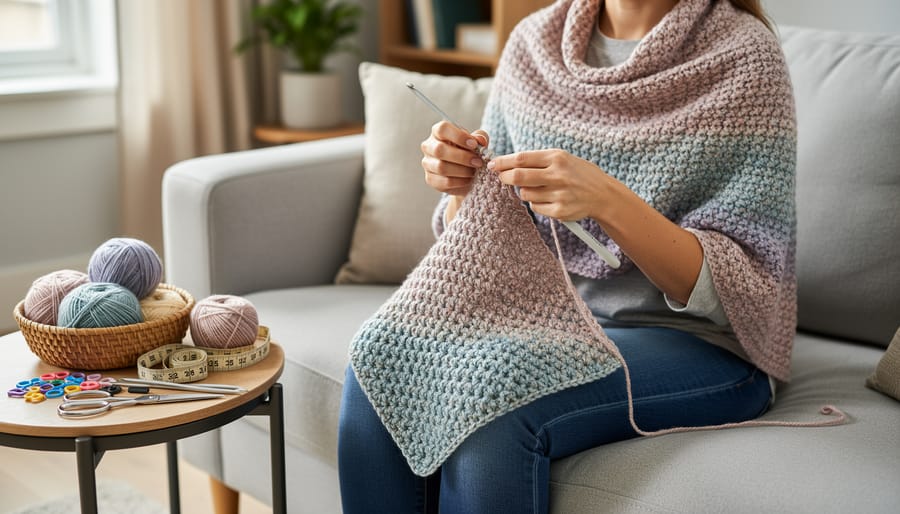
When you’re ready to move beyond practice swatches and small dishcloths, shawls offer that perfect sweet spot between achievable and impressive. Unlike fitted garments that demand precise gauge and complex increases, shawls embrace a forgiving nature that makes them ideal for building your confidence.
The beauty of a shawl lies in its flexibility. If your tension shifts halfway through, and it often does when you’re still developing muscle memory, the fabric simply drapes differently rather than creating an unwearable garment. There’s no armhole to fit, no neckline to shape, no concern about whether it’ll actually button closed. You work the same straightforward stitches in a rhythmic pattern until you reach your desired size, then bind off. That simplicity doesn’t mean the results lack impact. A well-chosen shawl pattern transforms basic stitches into something genuinely stunning.
Sarah discovered this three years ago when she’d grown bored with her fifth dishcloth. She’d mastered tension and could follow a pattern, but needed a project with more presence. Her first triangular shawl, a free pattern worked in simple double crochet with regular increases, took six weeks of evening crafting. The repetitive nature felt meditative rather than tedious, and watching the triangle grow gave her that sense of progress small projects never quite delivered. When she finally blocked the finished piece and draped it over her shoulders, something clicked. This wasn’t just practice anymore. This was wearable art she’d created herself.
Shawls also offer immediate versatility. You can wear them to dinner, toss them over a coat on chilly mornings, or gift them knowing they’ll actually get used. That practical appeal makes every hour invested feel worthwhile, keeping you motivated through the inevitable learning moments every first big project brings.
Where to Find Quality Free Shawl Patterns in 2026
What to Look for in a Beginner-Friendly Pattern
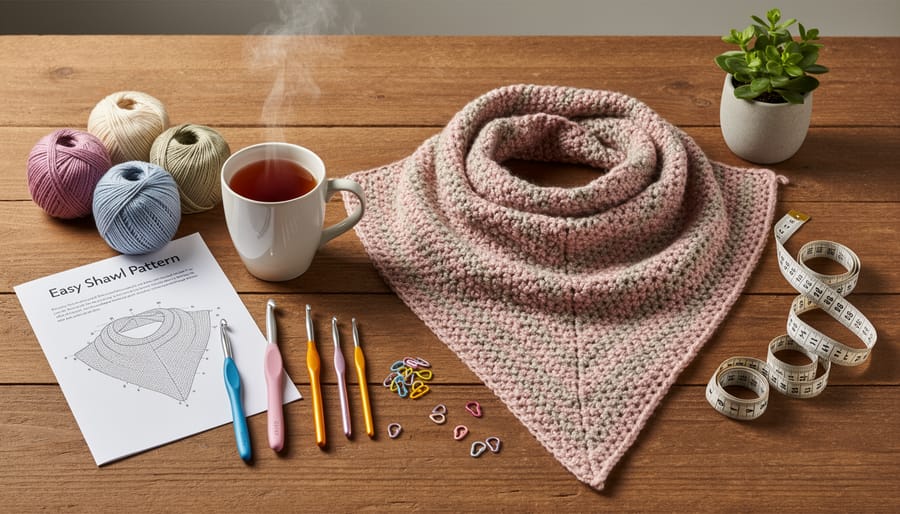
A truly beginner-friendly pattern does more than slap an “easy” label on the cover. Look for patterns that include stitch counts at the end of each row, these simple numbers keep you on track and catch mistakes before they multiply. The difference between struggling through your first shawl and actually finishing it often comes down to this one detail.
Clear written instructions matter just as much as the stitches themselves. The best beginner patterns spell out every step without assuming you know shorthand or can decode cryptic abbreviations. When a pattern says “dc in next 5 sts” instead of just “5 dc,” it’s showing respect for your learning process.
Photo tutorials or detailed stitch diagrams transform confusing moments into manageable ones. Some patterns include both written instructions and visual guides, which helps when you’re a visual learner or when written directions alone feel murky. Many patterns available as instant download PDFs on platforms like Etsy and Ravelry now include photo support specifically for beginners.
Watch out for special stitches beyond the basics. If a pattern requires you to learn the cluster stitch, puff stitch, and crocodile stitch all at once, save it for later. Patterns built on chains, single crochet, and double crochet give you enough to focus on without overwhelming your learning curve.
Yarn weight recommendations aren’t suggestions, they’re roadmaps. A pattern designed for worsted weight yarn won’t behave the same with fingering weight, no matter how closely you follow the instructions.
Understanding Pattern Formats
Free shawl patterns come in several formats, each with distinct advantages depending on how you learn best.
Instant download PDFs are the most popular format. These digital files land in your inbox immediately after you find them on platforms like Etsy or Ravelry. You can print them out, mark them up with notes, and keep them forever without worrying about broken website links years later. Many designers offer the same pattern across multiple platforms, so you might find identical patterns on both Etsy and Ravelry.
Online patterns live directly on websites or blogs. They’re convenient because you can access them from any device without downloading files. The downside? If the designer removes the pattern or the site goes down, it’s gone.
Video-accompanied patterns combine written instructions with visual demonstrations. These work beautifully if you’re a visual learner who needs to see exactly how a stitch looks in motion. Some creators sync their videos with PDF patterns, while others walk through the entire project on YouTube.
Most beginner-friendly patterns include photos or stitch diagrams regardless of format. When browsing free options, check whether the pattern comes with visual aids. A simple PDF with clear instructions and progress photos often beats a fancy format with confusing explanations.
Essential Techniques for Easy Shawl Success
The beauty of easy shawl patterns lies in their simplicity, not their speed. Master a handful of fundamental stitches, and you’ll unlock dozens of stunning free patterns without wrestling with complex techniques.
Start with the foundation chain. This creates your initial row and determines your shawl’s starting width or point. Keep your tension relaxed, too-tight chains make the first row frustratingly difficult to work into. Count as you go, marking every tenth chain with a stitch marker if you’re working a larger starting chain.
Single crochet forms the backbone of many beginner shawls. Insert your hook, yarn over, pull through, yarn over again, pull through both loops. It creates a dense, warm fabric perfect for cozy wraps. The stitch is short, which means more rows to reach your desired length, but the repetitive rhythm becomes meditative once you find your groove.
Double crochet works up faster and creates a more draping fabric. Yarn over before inserting your hook, pull through, then work off the loops two at a time. Many triangular shawls rely heavily on double crochet because it builds height quickly and creates an elegant, flowing drape.
Increases shape your shawl without complicated pattern reading. The most common method? Simply work two stitches into the same space. Triangular shawls typically increase at the center point and both edges, creating that classic wedge shape as you progress.
Half double crochet occasionally appears in beginner patterns as a middle ground between single and double crochet. Yarn over, insert hook, pull through, then yarn over and pull through all three loops at once.
Here’s the crucial reality: even with these accessible stitches, a full-sized shawl takes time. A pattern might be genuinely easy to follow, requiring only basic stitches you can master in an afternoon, but completing the piece might take weeks of steady work. That’s not a flaw in the pattern or your skill. Beautiful, wearable pieces deserve the hours they require.
Types of Easy Shawl Patterns to Start With
Not every shawl is built the same way, and understanding the basic construction types helps you pick patterns that match both your skill level and the look you’re after. Each style has its own rhythm and quirks, but all of these can be found in genuinely beginner-friendly free patterns.
Triangular shawls worked from the top down are probably the most common style you’ll encounter. These start with just a few stitches at the center back of your neck and grow outward through strategic increases along the edges and center spine. What makes them so beginner-friendly is the repetitive nature: you’re essentially crocheting the same row over and over, just with more stitches each time as the piece grows. That predictability means fewer opportunities to get lost in complex instructions. The triangle shape drapes beautifully over shoulders and stays put without constant adjustment.
Rectangular wraps are even simpler in concept. You chain your desired width, then crochet in straight rows until you’ve reached your preferred length. There’s no shaping, no increases or decreases to track, just steady forward progress. These are perfect if you struggle with counting or want a project you can pick up and put down without needing to remember where you are in a pattern. The downside is they require more concentration to keep your edges straight and your tension consistent throughout, but that’s actually great practice for building fundamental skills.
| Shawl Type | Difficulty Level | Yarn Requirements | Best For |
|---|---|---|---|
| Triangular (top-down) | Easy | 400-800 yards | Beginners wanting elegant drape |
| Rectangular wrap | Very Easy | 600-1000 yards | Those who prefer no-shaping simplicity |
| Crescent shape | Easy-Intermediate | 500-900 yards | Makers comfortable with increase variations |
| Granny square assembly | Easy | Variable (600-800 yards typical) | Fans of portable, modular projects |
Crescent shawls offer a happy middle ground between triangular and rectangular designs. They create a curved shape that sits comfortably across your shoulders with slightly elongated points. These typically start at the center back and work outward, but with different increase patterns than triangular shawls to create that gentle curve. While slightly more complex than basic triangles, they’re still quite manageable for beginners who’ve completed a project or two.
Granny square assembly shawls take a completely different approach. Instead of working one continuous piece, you crochet individual squares, then join them together to form your shawl. This modular method is brilliant for beginners who find long rows intimidating or who want truly portable projects. You can make a few squares during your lunch break, join them later, and stop whenever your shawl reaches a size you like. The repetitive nature of making identical squares builds confidence and consistency in your tension. Some free patterns provide layouts for triangular arrangements of squares, while others create rectangular wraps.
From Pattern to Wearable Art: A Maker’s Journey
Sarah Mitchell discovered her first free shawl pattern on a quiet Sunday afternoon in 2023, bookmarking it after finishing yet another dishcloth. That simple triangular design, worked in basic double crochet with gradual increases, became the foundation for what would transform from a hobby into a thriving creative business.
Her early attempts weren’t perfect. The tension varied, creating wavy edges she learned to block out. She froze twice, convinced she’d miscounted stitches, but pushed through each time. Three weeks later, she wrapped that first completed shawl around her shoulders and felt something shift. The piece wasn’t just functional, it carried her time, her choices, her growing skill.
Within six months, Sarah had completed eight free patterns, each teaching her something new about construction, color transitions, and texture. Friends started asking if she’d make them one. Then a coworker offered to pay. Sarah hesitated at first, unsure if her work deserved money, but she recognized the hours of practice behind each stitch.
She opened her first online shop in early 2024, starting with finished shawls made from adapted free patterns. As her confidence grew, she began designing original variations, changing stitch combinations, developing her own color palettes, writing instructions that reflected how she wished patterns had been explained to her as a beginner.
Today, Sarah lists her designs through multiple websites for selling crafts including Elephant In The Room. She still credits those initial free patterns for teaching her that beautiful, wearable art didn’t require expensive classes or complicated techniques. Her story illustrates how mastering accessible patterns creates the foundation to turn passion to profits transforming quiet Sunday afternoons into a sustainable creative practice.
Common Beginner Mistakes and How to Avoid Them
The most common pitfall beginners face with shawl patterns is inconsistent tension. You’ll start with tight, neat stitches, then gradually loosen up as you get comfortable, creating a piece that flares or puckers unpredictably. Practice maintaining the same hand position and yarn tension throughout your work. If you notice your tension changing mid-project, don’t rip everything out, shawls are forgiving, and blocking (gently stretching the finished piece while damp) can even out minor inconsistencies beautifully.
Miscounting stitches ranks as the second biggest frustration. When you’re working on row fifty of a repetitive pattern, it’s easy to lose track and end up with too many or too few stitches. Place stitch markers at regular intervals across your work, especially at pattern repeats. Count your stitches at the end of every few rows rather than waiting until you’re twelve rows past a mistake. A simple tally counter or even making tick marks on paper can save hours of backtracking.
Choosing yarn that doesn’t match the pattern’s recommended weight creates problems you won’t notice until you’re halfway done. A bulky yarn in a pattern designed for fingering weight won’t drape properly, no matter how perfectly you execute the stitches. Stick with the suggested yarn weight for your first few shawls. Once you understand how different weights behave, you can experiment.
Many beginners abandon their first shawl when it’s taking longer than expected. Remember that patterns labeled “easy” refer to stitch simplicity, not speed. A beautiful shawl with thousands of basic double crochet stitches still requires time and patience. Set realistic expectations, work in comfortable sessions rather than marathon stretches, and celebrate progress by rows completed rather than time spent.
Making Your Shawl Uniquely Yours
Even with a free beginner pattern, you can create something that looks completely your own. Start with color, swapping the suggested shade for your favorite hue instantly makes the shawl feel personal. Try variegated or ombre yarns for built-in visual interest without changing a single stitch. A solid pattern becomes dramatic in deep jewel tones or soft and romantic in pastels.
Texture transforms everything. Use the same pattern with a silky bamboo blend instead of basic acrylic, or choose a chunky wool for cozy weight. Many beginners discover their signature style through yarn experimentation. Keep samples organized as you explore different fibers, which helps you store craft supplies efficiently and remember what worked best.
Simple finishing touches elevate any shawl. Add fringe by cutting yarn lengths and knotting them along the edges, no special skills required. Tassels at the corners create movement and polish. A contrasting border in a different color adds definition without complex stitches.
These personal choices matter beyond aesthetics. If you’re considering selling your work, customized pieces command higher prices than identical reproductions. Buyers value one-of-a-kind color combinations and thoughtful details that show creative vision, not just pattern-following ability. Your free beginner pattern becomes the foundation for something truly original, proving that accessible doesn’t mean cookie-cutter. The shawl reflects your taste, and that’s what makes handmade pieces special.
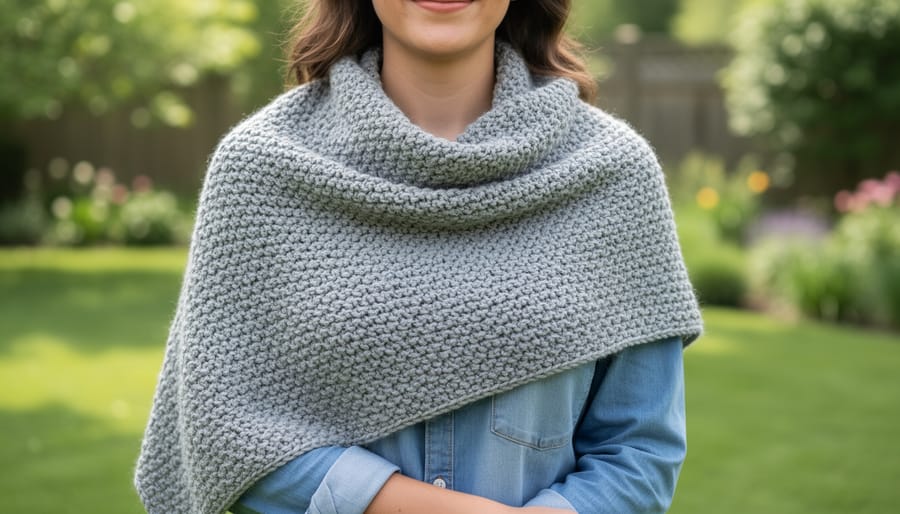
You’ve explored the world of free crochet shawl patterns, discovered where to find them, learned what makes them truly beginner-friendly, and heard stories from makers who’ve turned this craft into something meaningful. Now it’s your turn to cast on that first chain and begin your own shawl journey.
The beauty of starting with free patterns is that there’s no financial risk, only creative reward. That PDF you download today could lead to a stunning wearable piece you’ll treasure for years, a heartfelt gift that becomes someone’s favorite winter accessory, or even the foundation of a creative business. Every maker who now sells their work started exactly where you are, with a single project and the willingness to learn.
As you work through your first shawl, you’ll join a global community of crocheters who understand both the meditative rhythm of repetitive stitches and the thrill of watching a simple pattern transform into wearable art. Share your progress in online crafting groups, post your finished piece on social media, or simply wrap yourself in the satisfaction of creating something beautiful with your own hands.
Remember that handmade items carry a value beyond their materials. When people ask why buy handmade the answer lies in the intention, creativity, and care woven into every stitch. Your shawl tells a story that mass-produced items never can.
Pick a pattern that speaks to you, gather your yarn and hook, and start creating.